How to Choose a Shower Door Seal Manufacturer (2026 Buyer’s Guide)
Published by GoldRays, a shower door seal manufacturer in Foshan, China: we are one of the suppliers this guide helps you evaluate, it does not rank companies, and you can apply the same checks to us.
A profile that is 2 mm off, or a compound that yellows or grows mould, leads to leaks, returns and complaints.
Quick checklist
- ☐ Manufacturer, trader or distributor — can they show the factory and extrusion lines?
- ☐ Material of each part (body, fin, magnet cover) in writing
- ☐ Dimension table per glass thickness, plus a drawing
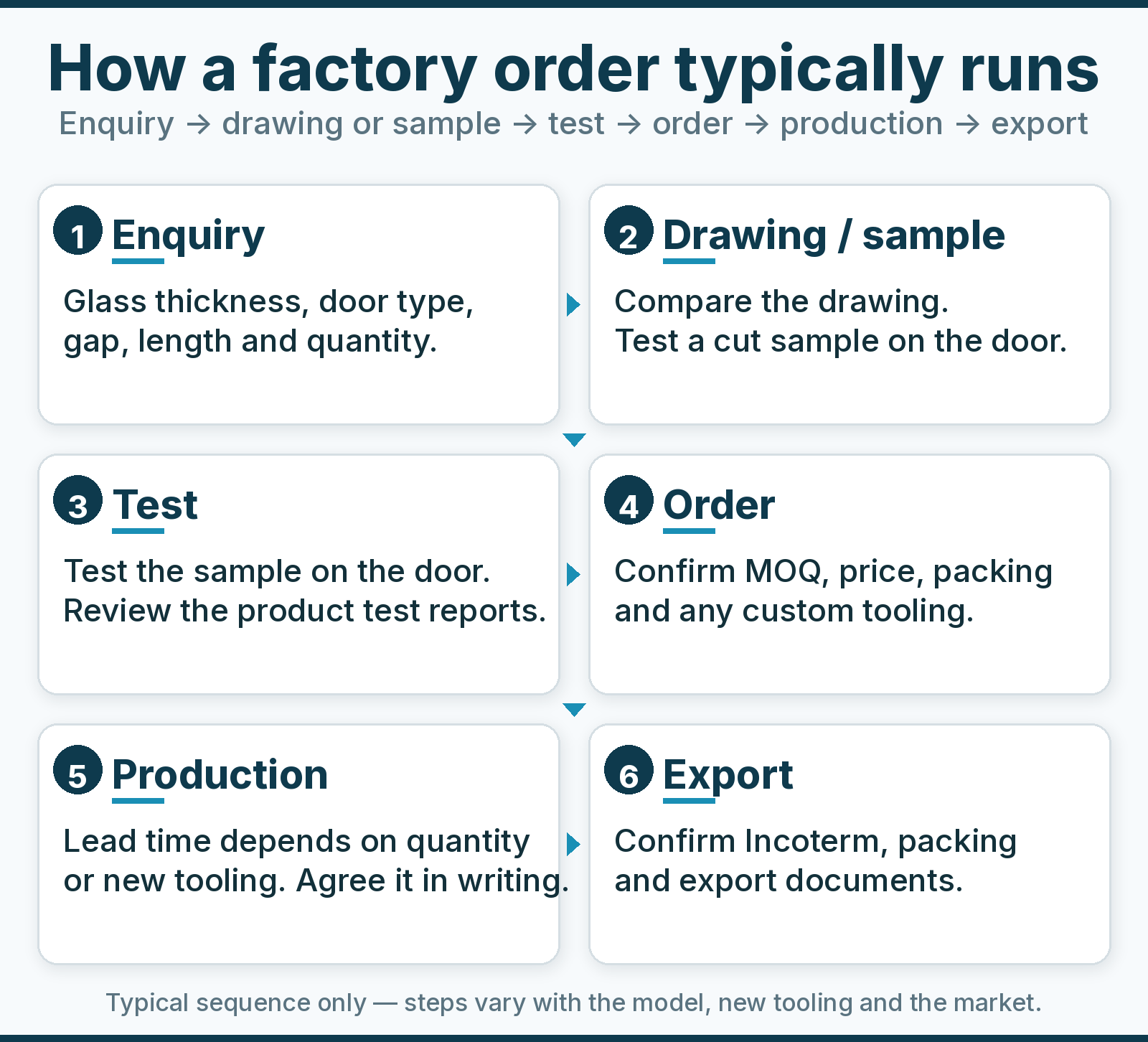
- ☐ Sample tested on a real door; reports match the model
- ☐ MOQ per model, lead time, packing and Incoterm in writing
- ☐ Custom work: tooling cost, die ownership and exclusivity
1. Material
Most clear shower door seals come from one of five material families. One profile can combine two, for example a rigid body with a softer fin.
| Material | Typical use |
|---|---|
| PVC (flexible vinyl) | Common for clear seals with soft fins, bulbs and wipes. |
| Polycarbonate (PC) | A rigid, glass-like body, often with a softer fin or lip. |
| TPE | A rubber-like plastic used by some makers for soft parts. |
| Silicone | Used by some makers for soft, heat-tolerant parts. |
| EVA | A soft, flexible plastic used by some makers as a silicone alternative. |
- Ask which compound is used for the body, the fin or lip, and any magnet cover.
- Get a written statement of the material and colour.
- Confirm the approved sample uses the same compound as the bulk order.
2. Glass thickness fit
Seals are made for a specific glass thickness — an 8 mm seal will not grip 10 mm glass, and a 10 mm seal will be loose on 8 mm.
- Common sizes are 6, 8, 10 and 12 mm; in North America, 3/8″ (about 10 mm) and 1/2″ (about 12 mm).
- Ask for a dimension table per glass thickness, not one range for a whole family, and check the gap to be closed.
- If replacing an old seal, send a short offcut or an end-on photo next to a ruler.
3. Profile type and position
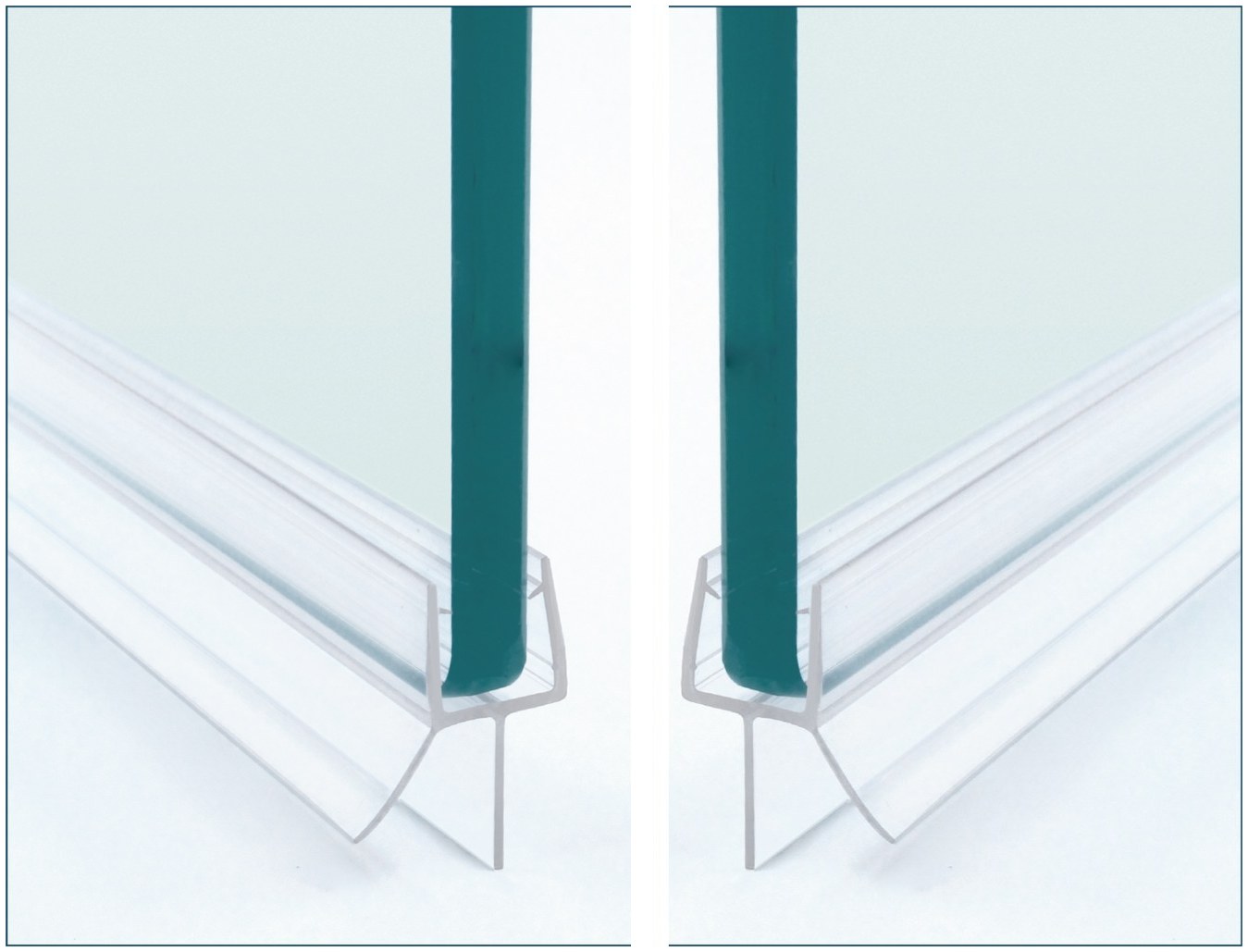
Choose the profile by where it sits and how the door moves. A similar look or the same angle does not prove a fit — always compare the full drawing.
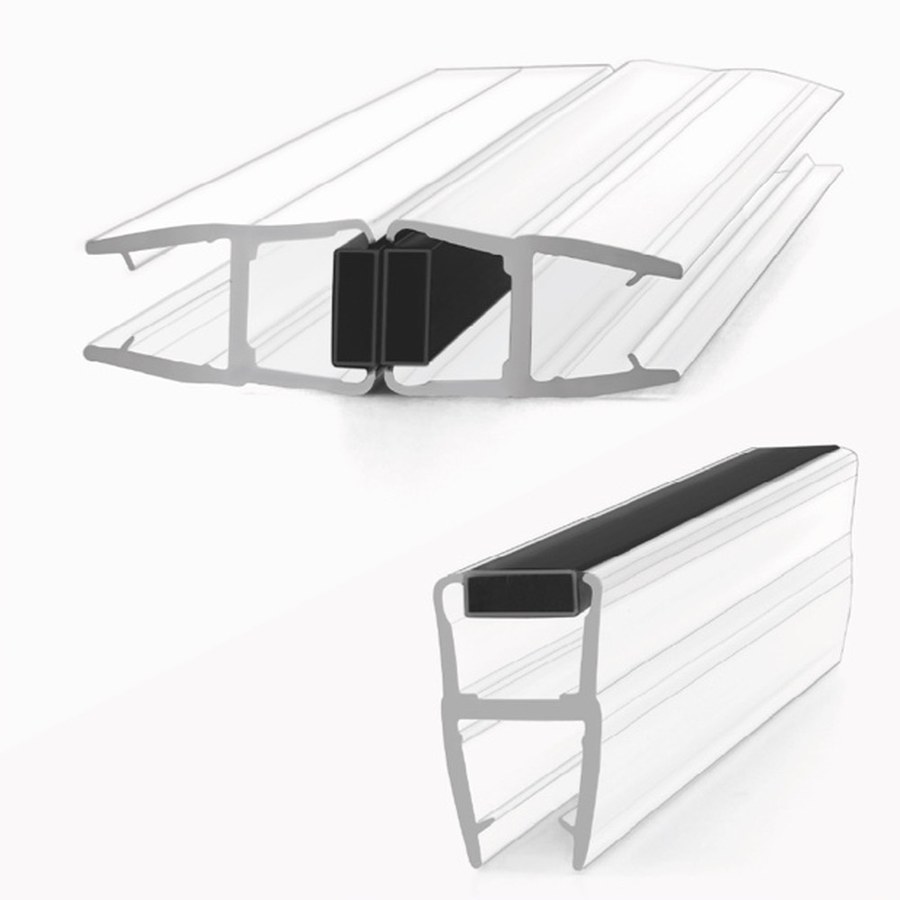
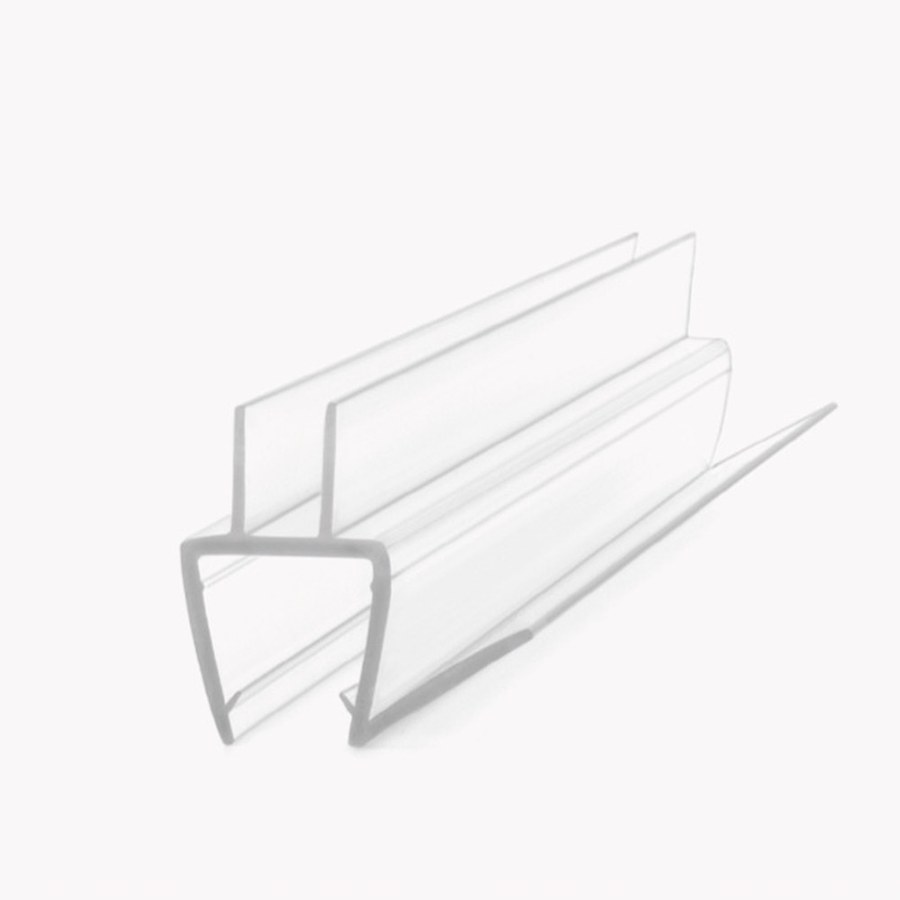
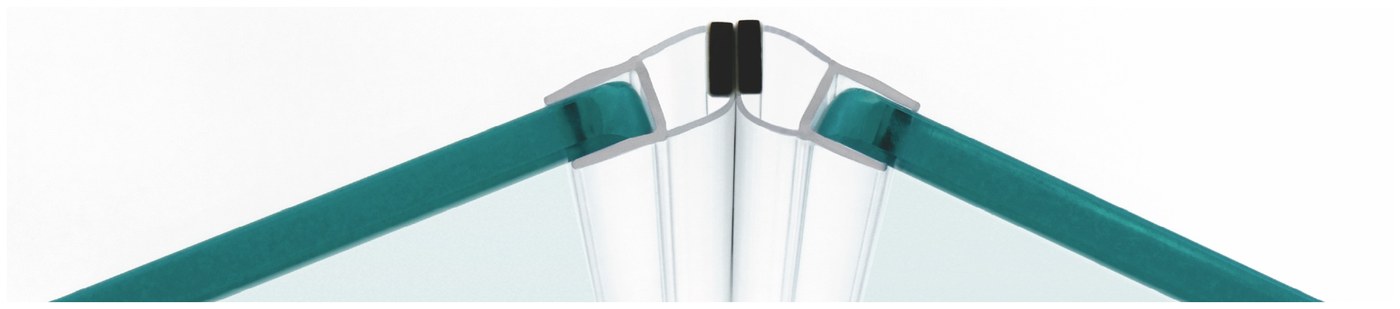
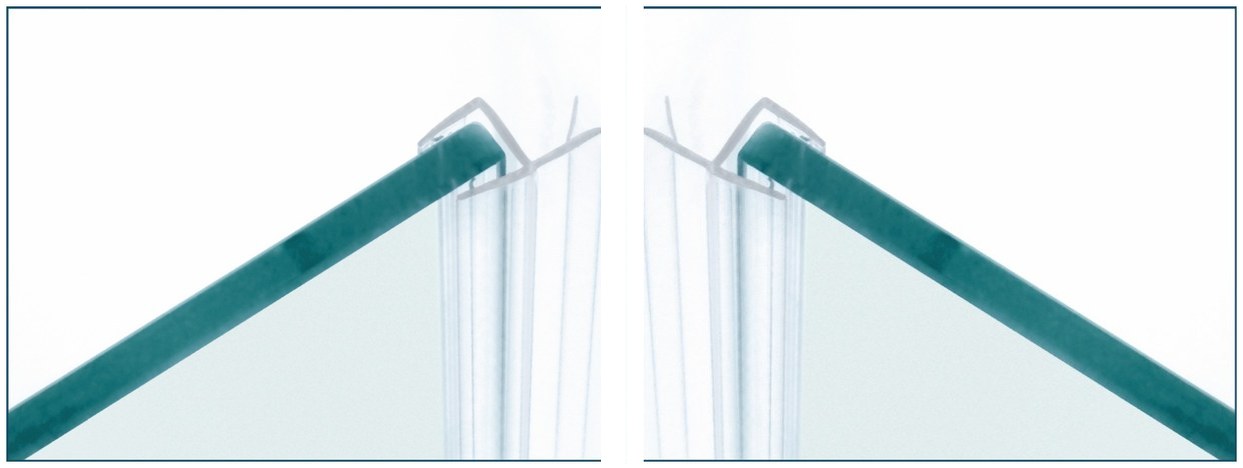
- Magnetic seals close a door-to-panel or door-to-door gap at 90°, 135° or 180°. Check both halves, the angle, the closed gap and the opening direction.
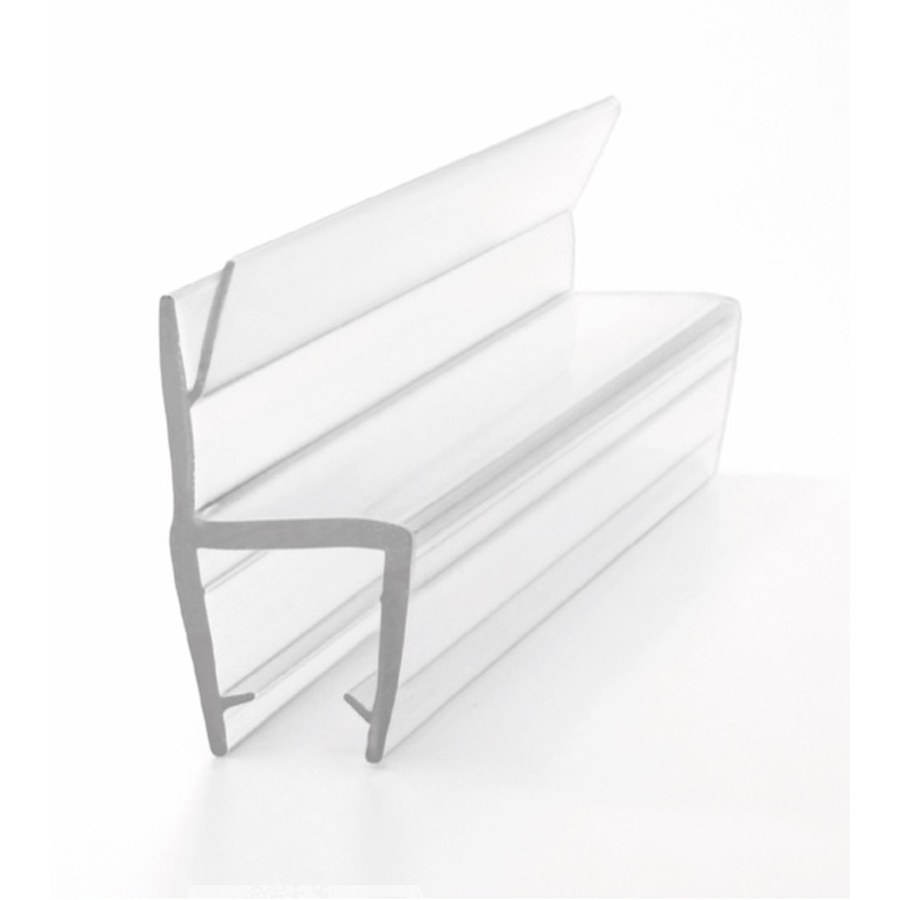
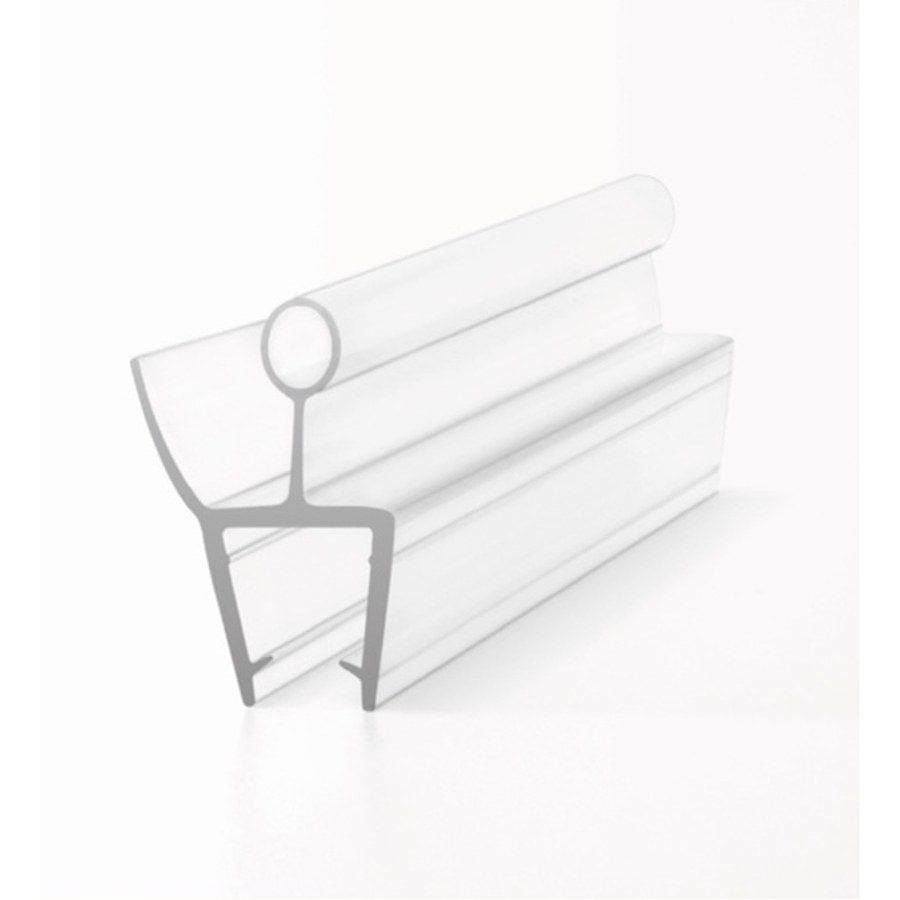
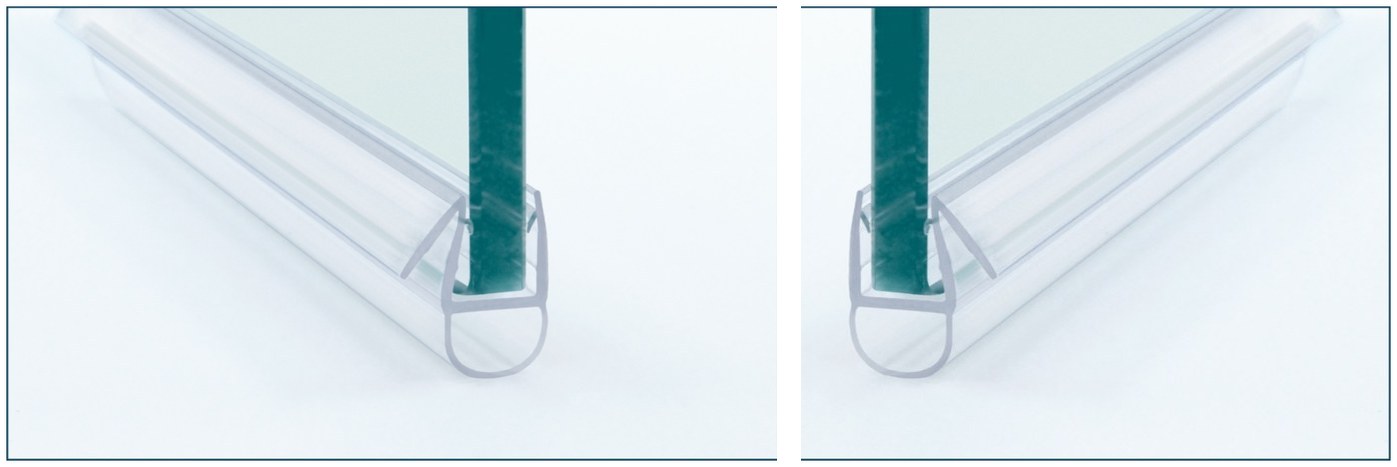
- Bottom seals and sweeps sit at the lower edge — check the gap under the glass, lip direction, drip rail and any tray or threshold.
- Side, hinge-side and closing seals fill the vertical gap at the wall or a fixed panel.
- Sliding, bifold and curved-door seals must follow the door’s movement; glass-to-glass connectors (H-profiles) join fixed panels.
4. Testing and certifications
Do not confuse company certificates (the company’s systems) with product test reports (a tested sample).
- Look for the test method, lab, report number, issue date and a description of the sample.
- Ask whether the tested sample matches the model, material and colour you are buying.
- Useful tests: UV or xenon-arc (yellowing), mould and bacteria, cleaner resistance and, for the EU, REACH SVHC. A logo on a web page is not a report — ask for the report itself.
5. Samples, MOQ and lead time
A physical sample is the most reliable way to confirm fit before an order.
- Ask whether samples are free, how long they are, who pays freight and how long they take — then test one on the actual door.
- Ask for the MOQ per model and whether colour, material or packing changes it. For one or two seals, use a local stockist.
- Ask for the standard lead time in writing, and what it depends on (quantity, new tooling or custom colour).
6. Customisation, export and communication
If no standard profile fits, a manufacturer can make a new extrusion die (tooling).
- Ask about tooling cost, die ownership, exclusivity, sample rounds, and logo, colour or packing options.
- For export, confirm the Incoterm, packing and documents (typically a commercial invoice, packing list, and any certificate of origin or test papers).
- A good supplier asks for glass thickness, gap, door type, length and quantity, sends dimensioned drawings, and answers in writing.
Comparing supplier types
The table compares types of supplier, not companies. The right choice depends on volume and support needed.
| Factory | Trading company | Western distributor / stockist | |
|---|---|---|---|
| Who it suits | Brands, importers, OEM | Several product types, one contact | Installers, small orders |
| Typical order | Hundreds of metres per model | Often similar to the factory | Single lengths to small cartons |
| Price | Usually lowest at volume | Factory price plus a margin | Highest; includes local stock |
| Custom profiles | Can tool new dies | Goes through a factory | Usually standard range only |
| Technical detail | Direct from those who extrude | Second-hand | Good for fitting their range |
| Lead time | Production plus shipping | Factory time plus coordination | Often immediate from stock |
| Main risk | MOQ and shipping; you import | Less control of the source | Limited choice; higher cost |
Examples (not independently verified): SIMBA (glassseals.com), Jinsu / Venus Seals (venusseals.com), KAILAN (klan-hk.com) and GoldRays (about us). Western distributors: C.R. Laurence (crlaurence.com) and Bohle, a manufacturer and supplier of glass products with an online shop (bohle.com).
Where GoldRays fits
GoldRays is a Foshan factory. Since 2001 we have extruded seals for glass shower doors and bath screens, supplying brands, distributors, wholesalers and importers; for a single replacement seal, use a local stockist.
GoldRays terms (guide values — see “How to order”)
- Materials: clear PVC and polycarbonate, including SuperClear™ PC, plus TPE and EVA. We do not make silicone; EVA is our alternative.
- Range: 224 models for 4–15 mm glass (2026/27 catalogue), including magnetic seals (90°, 135°, 180°) and bottom seals.
- MOQ: 500 m per model; smaller runs are occasionally possible.
- Lead time: 3–4 weeks for standard orders, depending on quantity.
- Samples: free, in cut lengths up to 1 m.
- Custom profiles: new tooling typically about USD 300–400; the profile stays exclusive to you.
- Testing: SGS samples — ASTM G155 Cycle 6, 300 h, max ΔE 0.75; Grade 0 ASTM G21 / ISO 846; CSA B45.5:22 / IAPMO Z124-2022 §5.15; REACH SVHC. Applies to those samples only (testing page).
For a quote or sample, contact us or email goldrays@showerdoorseal.org with glass thickness, door type, gap, length and quantity, plus a drawing or photo if you have one.
FAQ
How do I know if a shower seal supplier is a real manufacturer?
Ask for a live video of the extrusion lines and mould store, who makes the dies, and whether the company name matches on the quotation, licence and reports.
What MOQ should I expect from a shower door seal factory?
Always ask for the MOQ per model. GoldRays’s guide value is 500 m per model, smaller runs are occasionally possible, and a local stockist is better for one or two seals.
Which certifications matter for shower door seals?
Distinguish company certificates from product test reports. For the seal, look for UV or xenon-arc, mould, bacteria and cleaner tests, plus REACH SVHC for the EU, and confirm the sample matches your model.
How do I choose a magnetic shower door seal?
Match the angle (90°, 135° or 180°), glass thickness, closed gap and door movement, and check both halves. See the GoldRays magnetic seal page for drawings and sizes.
Can a factory make a seal from my drawing or old sample?
Yes, if no standard profile fits. Ask about tooling cost, die ownership, exclusivity and sample rounds; at GoldRays, new tooling is typically about USD 300–400 and stays exclusive.
This post is also available in: