6 Shower Seal Quality Checks Before You Place an Order
Last updated: October 2026
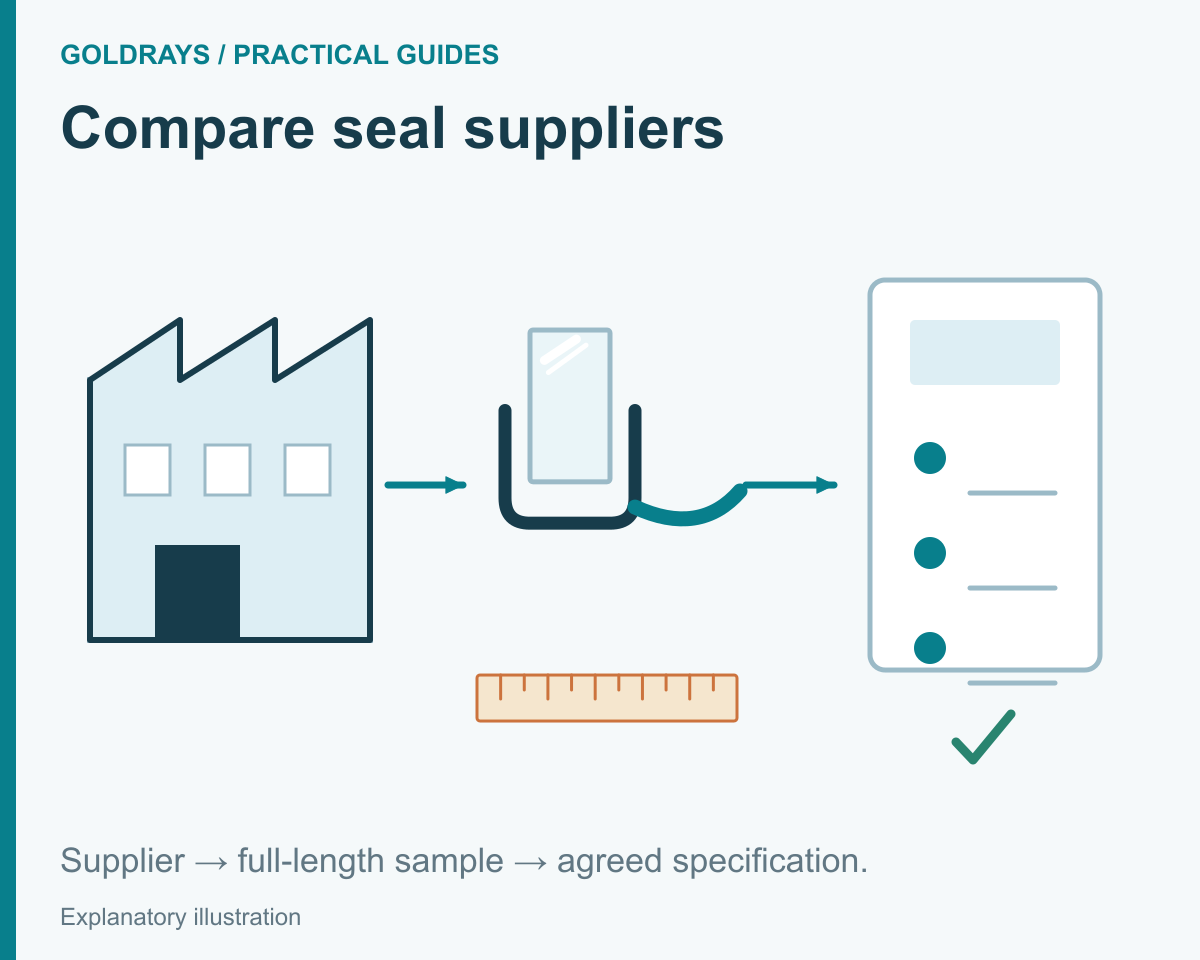
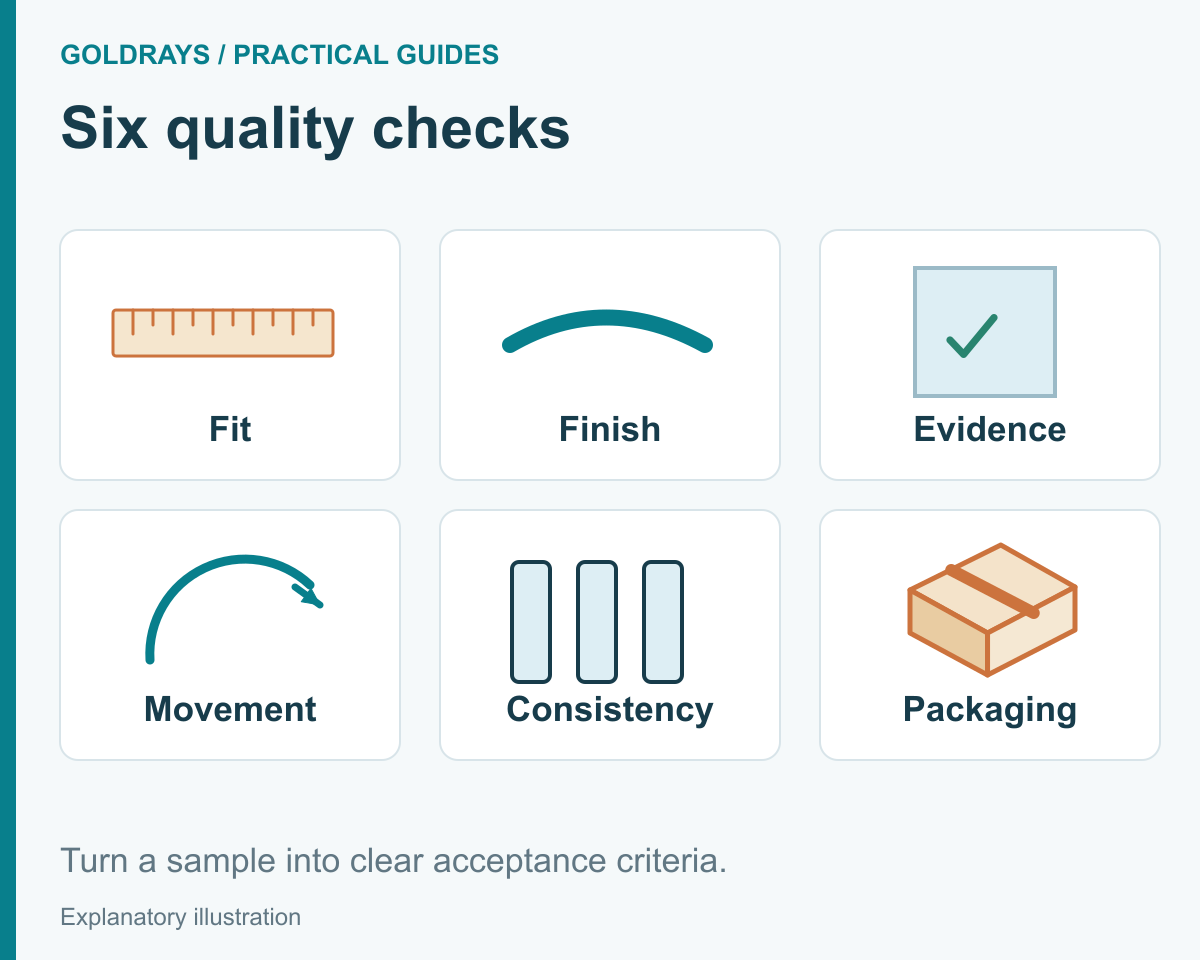
A clear sample can still fit poorly, arrive bent or differ from the next delivery. These six checks help buyers agree what an acceptable shower seal looks like and how it should work.
1. Check the fit
Record the installed position, actual glass thickness, relevant gap and door movement. Mark the gripping channel, lip direction, mating face and hardware clearances on the drawing.
Check a representative length on the intended assembly, not only its cut end. Agree the important dimensions and measurement method; a glass-thickness label does not specify the gap a seal can close.
2. Compare appearance consistently
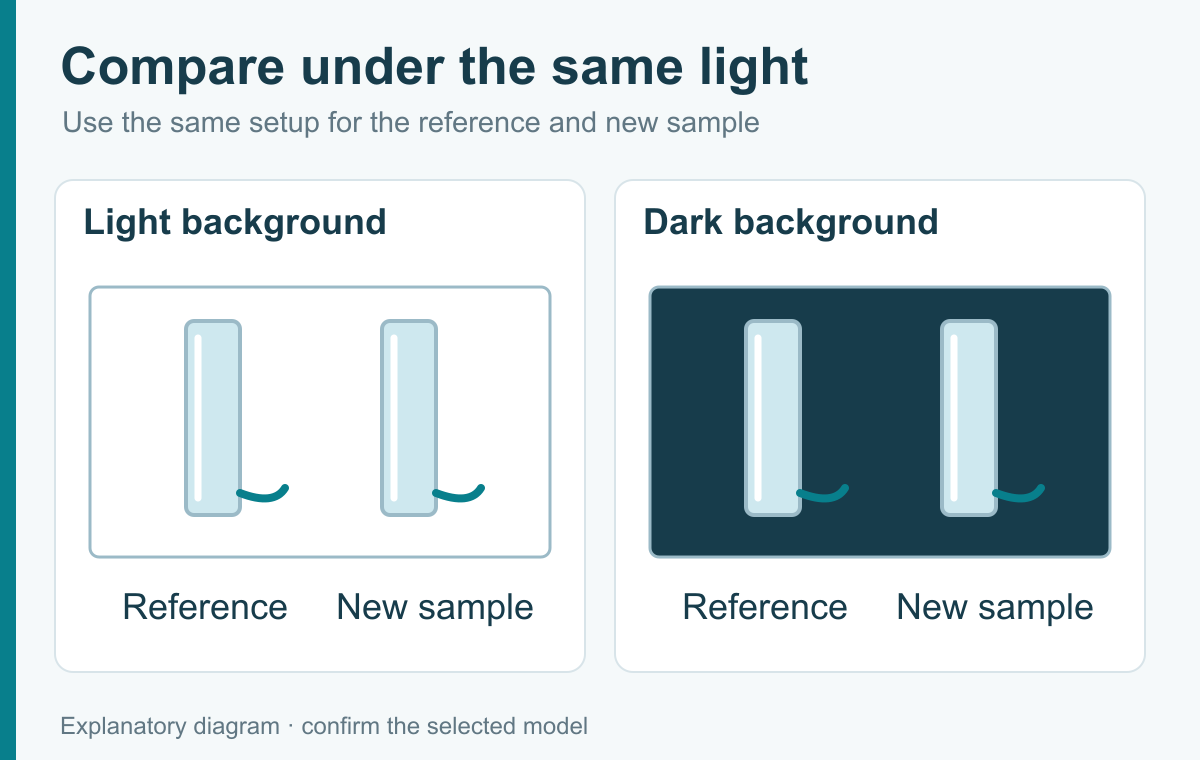
Place comparable samples against the same light and dark backgrounds under the same lighting. Look for haze, tint, scratches and uneven finish along the length.
Keep an accepted reference sample and a photograph of the comparison setup. Agree which differences matter in the installed position instead of relying on words such as “premium”.
3. Read the durability evidence
For ageing claims, identify the tested specimen, exposure conditions and measured change. ASTM G155 is an exposure practice; hours in a chamber do not directly establish years of service.
Cleaner and microbial results also depend on the specific method and conditions. Use the test-report guide to connect the evidence to the supplied material.
4. Test the working arrangement
Check retention, normal opening and closing, and water control together. Look for a lip that folds, a strip that catches or a channel that moves out of position.
For magnetic seals, assess the complete mating pair on the door. Strong attraction in the hand does not prove full-height closure; agree a repeatable functional check for the intended enclosure.

5. Control repeat deliveries
Link the approved sample to a drawing revision and production reference. Ask for notice when a material, colour, section or component changes.
Define incoming checks and the action taken when a delivery differs. Both parties need the same agreed limits before “within tolerance” can resolve a disagreement.
6. Inspect the packaging
Check protection against bending, surface abrasion and compression of exposed lips. The REHAU shower-profile catalogue illustrates why soft lips may need protection during storage and transport.
Review a sample pack where necessary, then inspect the unpacked profiles, labels and counts. Keep similar sections and different magnetic halves identifiable.
Retain one approval record covering all six checks, with unresolved points clearly marked. Use it for a GoldRays wholesale enquiry or when comparing repeat deliveries.
About the author
GoldRays technical team
The GoldRays technical team writes these guides at the GoldRays factory in Foshan, China, where clear PVC and polycarbonate shower door seals have been made since 2001. The team works with more than 40 production lines and more than 3,200 moulds for 4 to 15 mm glass, and answers trade questions about fit, materials and testing.
This post is also available in: