How to Find and Compare a Shower Seal Supplier
Last updated: October 2026
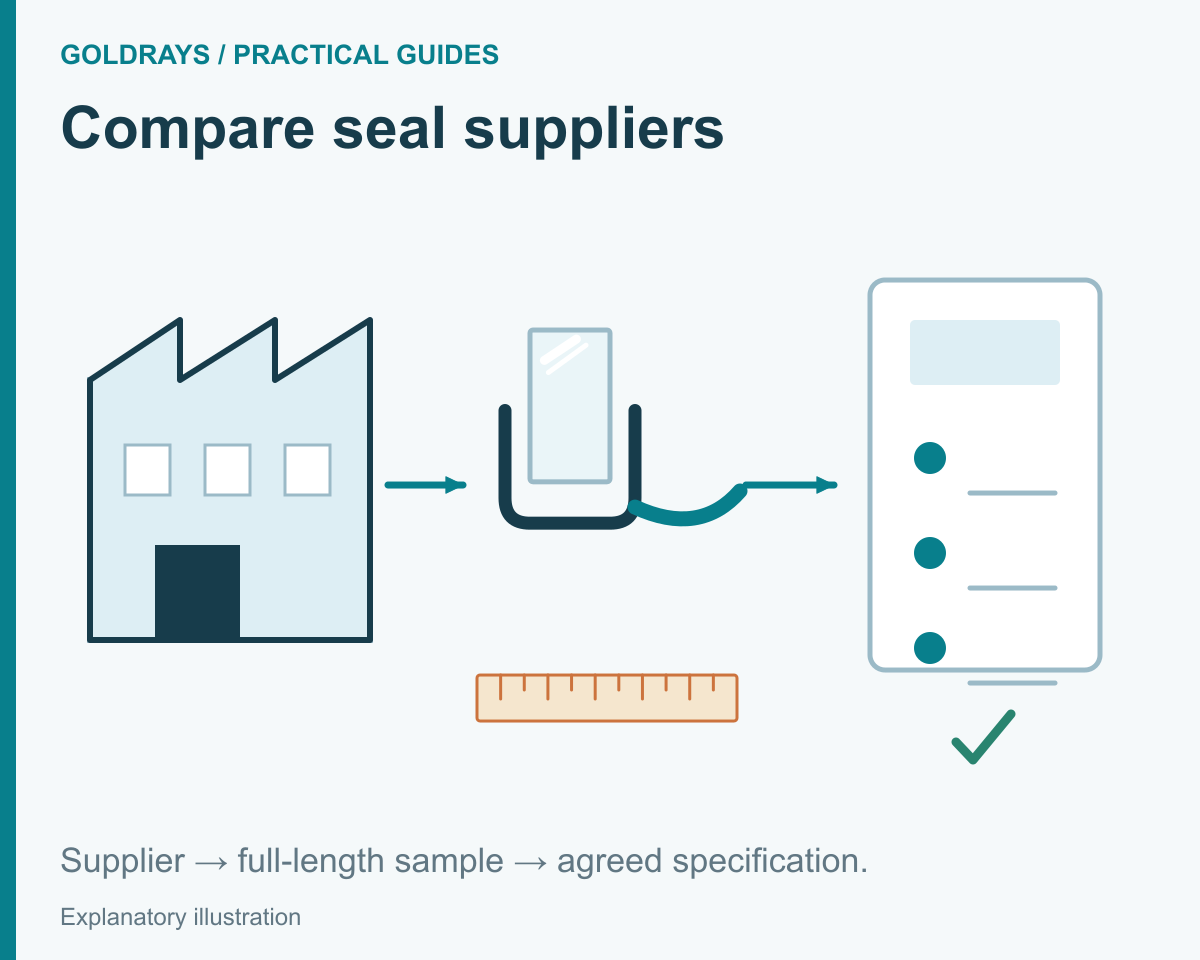
One replacement seal, a distributor’s stock range and a new enclosure design need different suppliers. Choose the buying route first, then compare candidates using the same drawings, measurements and sample requirements.
Start with the right route
For one replacement, start with the enclosure maker, original retailer or a specialist spare-parts seller. MERLYN’s spare-parts guidance illustrates why model identification matters: similar-looking parts are not automatically interchangeable.
For a resale range, look for suitable product coverage, clear identification and reliable replenishment. For a new design, find a supplier able to review the mating parts and support a sample approval process.
For a trade shortlist, use supplier catalogues, referrals and current industry exhibitor directories; then check each candidate’s actual shower-seal range.
Send a brief suppliers can answer
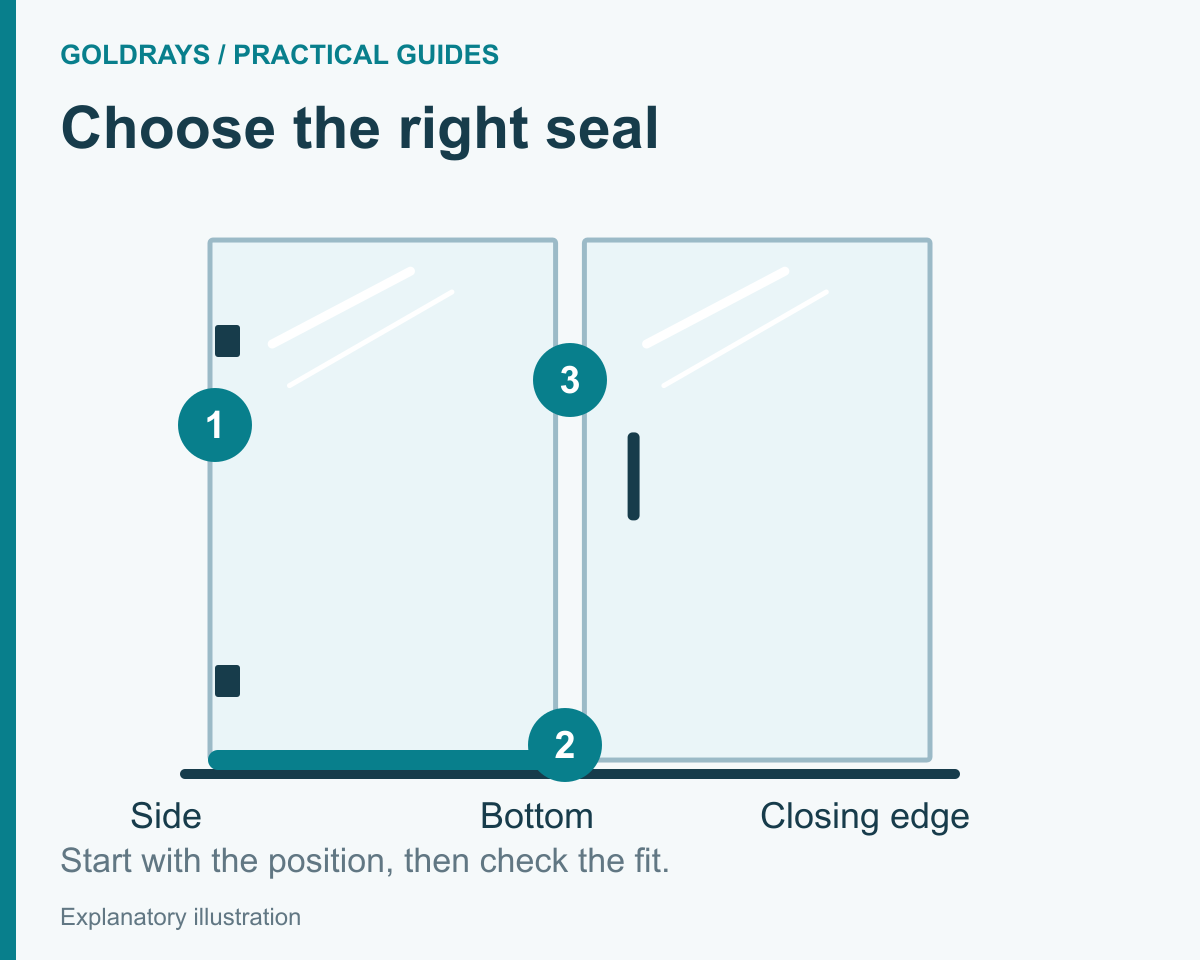
Include a whole-door photograph, the marked seal position and a clear end view. Add actual glass thickness, gap measurements, required length and how the door opens.
For magnetic products, show both mating sides and the closed arrangement. For curved glass, provide the available curve information instead of assuming a flexible lip means a flexible carrier.
State quantity, repeat demand, destination and packaging needs. A useful response identifies missing details and marks differences between your requirement and the proposed section.
Compare the complete offer
Check the exact model or drawing revision, material, finish and supplied length. Clarify whether the price covers one piece, a pair or a set.
Then compare minimum quantities, sample charges, packing, freight basis, payment and delivery terms. Ask how wrong profiles, transport damage or departures from the approved sample will be handled.
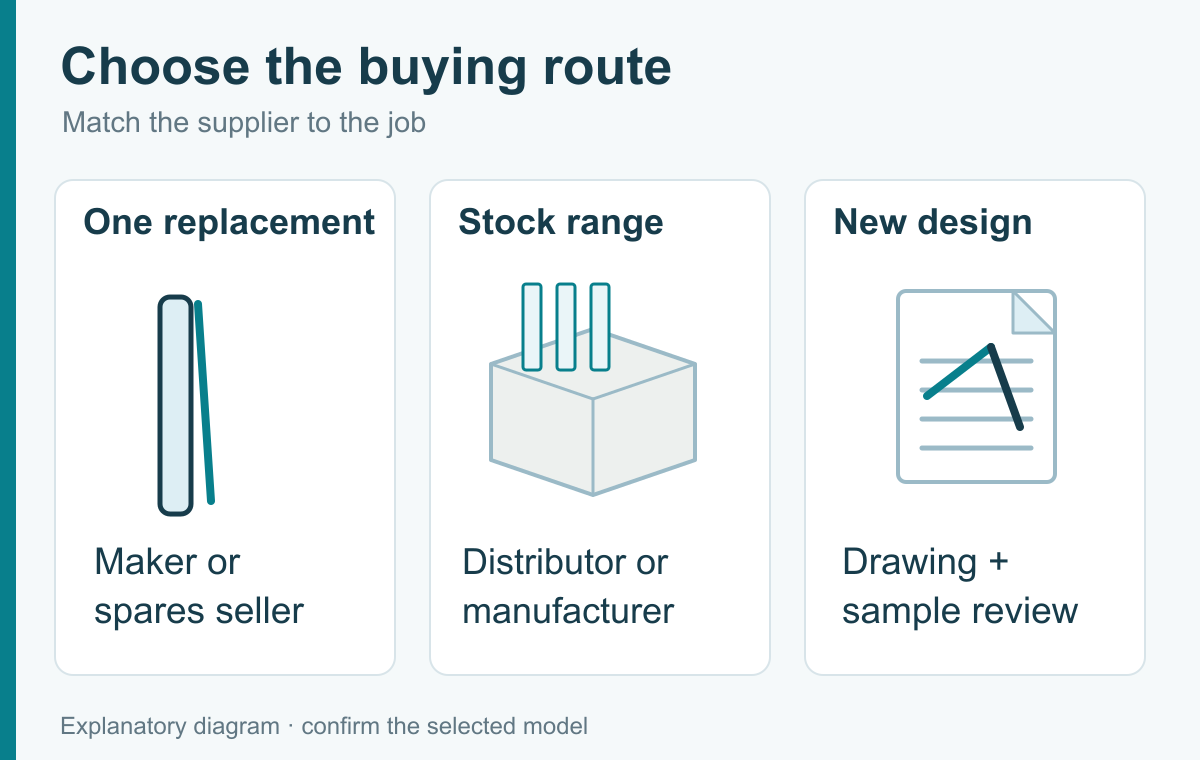
Request the nearest existing section before commissioning tooling. If development is necessary, agree tooling ownership, sample stages, revision costs and the point at which production may start; an “OEM” label does not settle these terms.
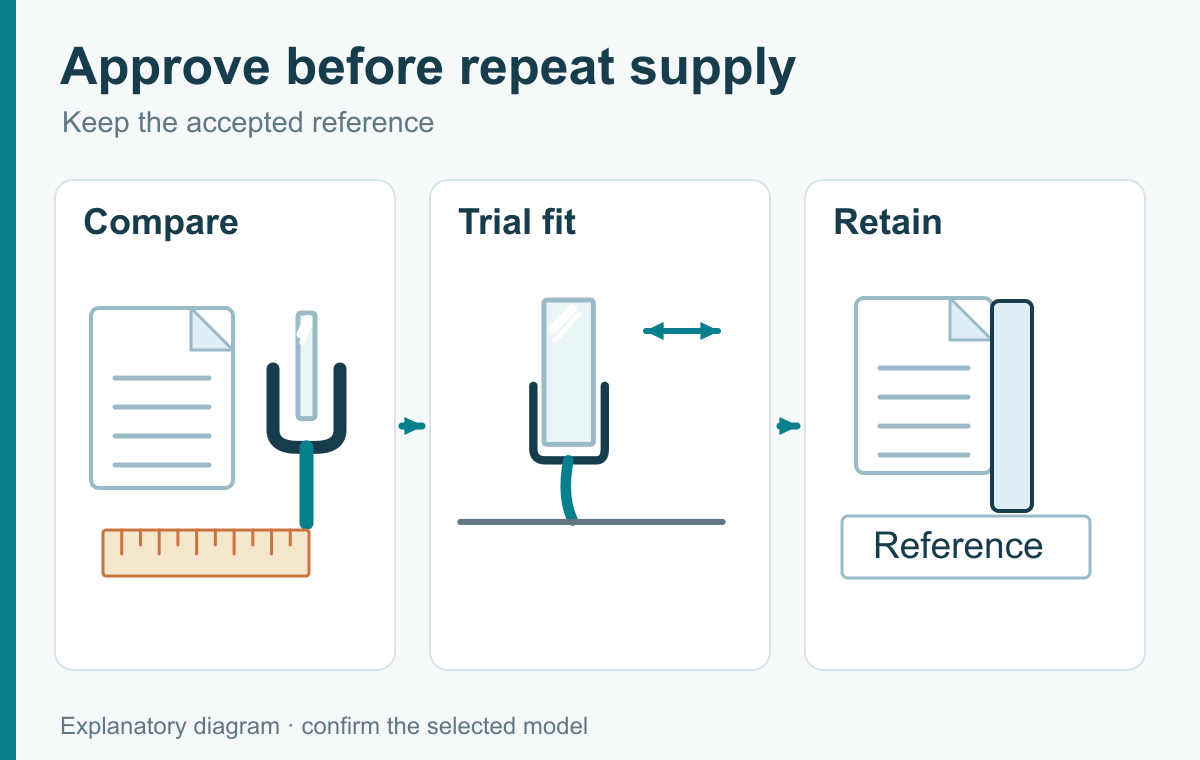
Approve a representative sample
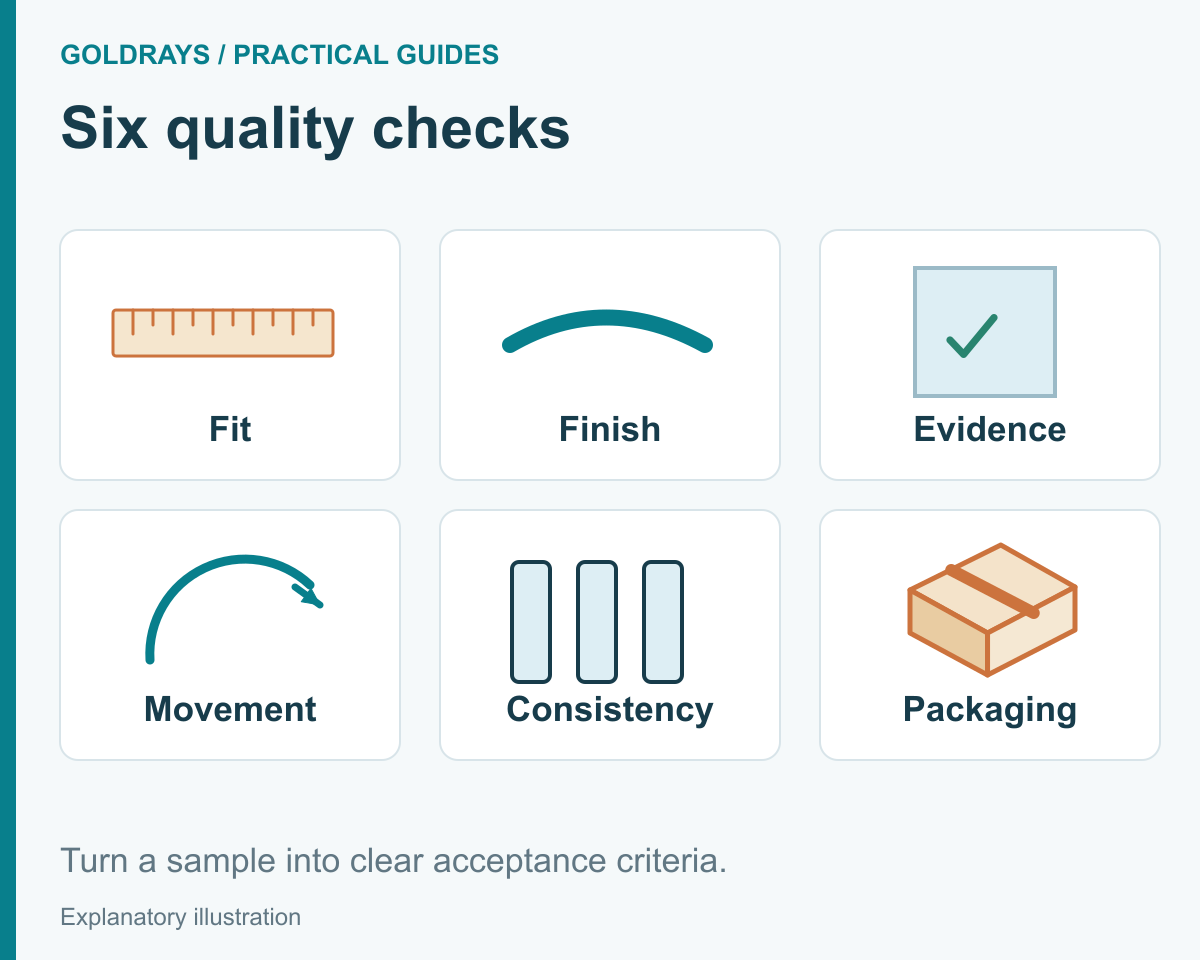
A short section can help identify the shape, but a representative length is needed to assess full-length fitting. Check it on the intended enclosure and compare appearance under consistent lighting.
Use the quality checklist to record the agreed sample and acceptance checks.
Review supporting test reports against the material offered. A factory claim, marketplace badge or exhibition listing is a lead to investigate, rather than a substitute for this approval.
Make repeat orders traceable
Keep the accepted drawing, sample reference, packaging example and quotation together. Require notice of changes affecting the approved product, so a repeat order does not depend on “same as last time”.
For GoldRays bulk-supply enquiries, send that brief with the available photographs and drawings. Use the custom profile route where a standard section cannot meet the requirement.
About the author
GoldRays technical team
The GoldRays technical team writes these guides at the GoldRays factory in Foshan, China, where clear PVC and polycarbonate shower door seals have been made since 2001. The team works with more than 40 production lines and more than 3,200 moulds for 4 to 15 mm glass, and answers trade questions about fit, materials and testing.
This post is also available in: