Shower Seal Test Reports: What Buyers Should Check
Last updated: October 2026
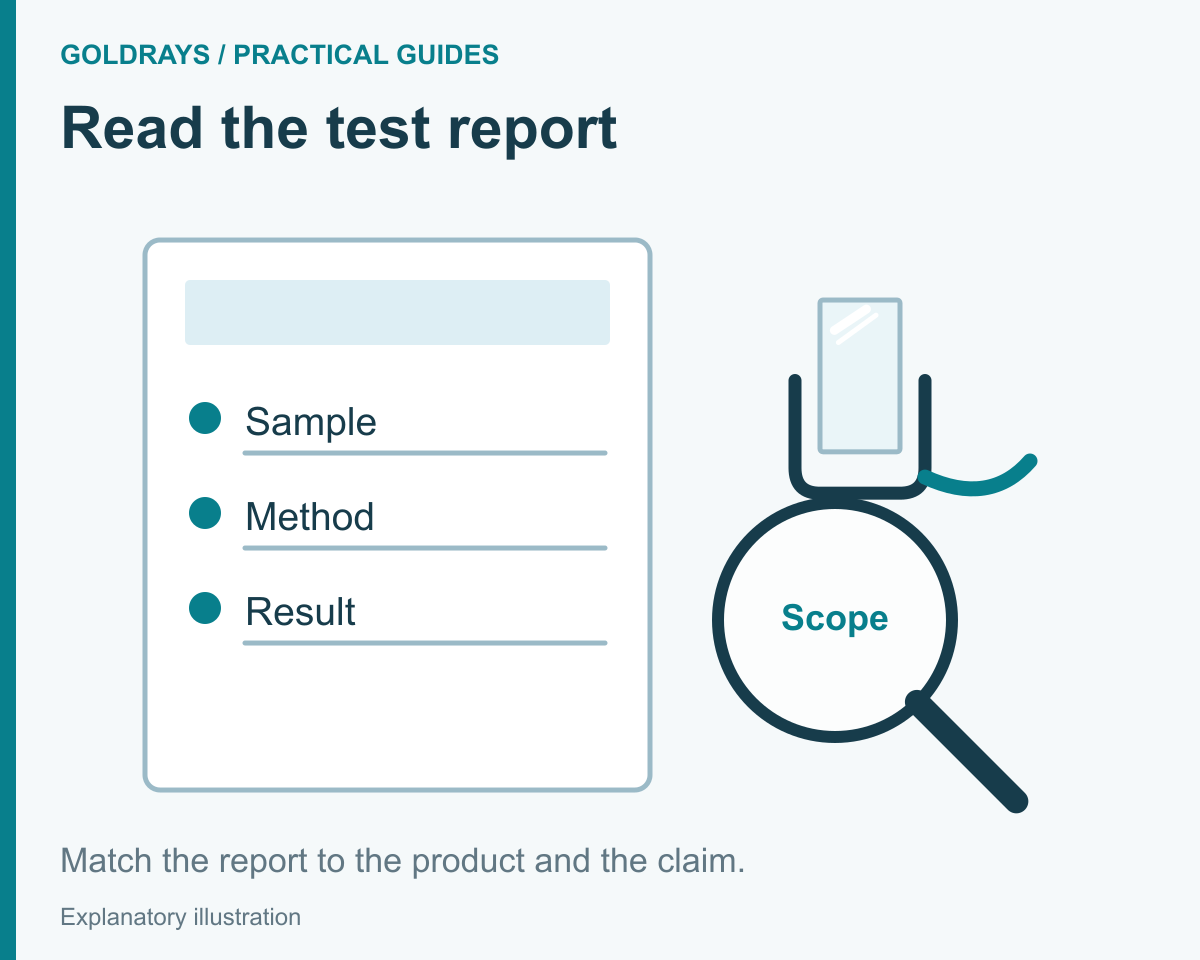
A useful test report answers a specific buying question. Before comparing results, check that the tested sample represents the shower seal you plan to order.
Match the report to the product
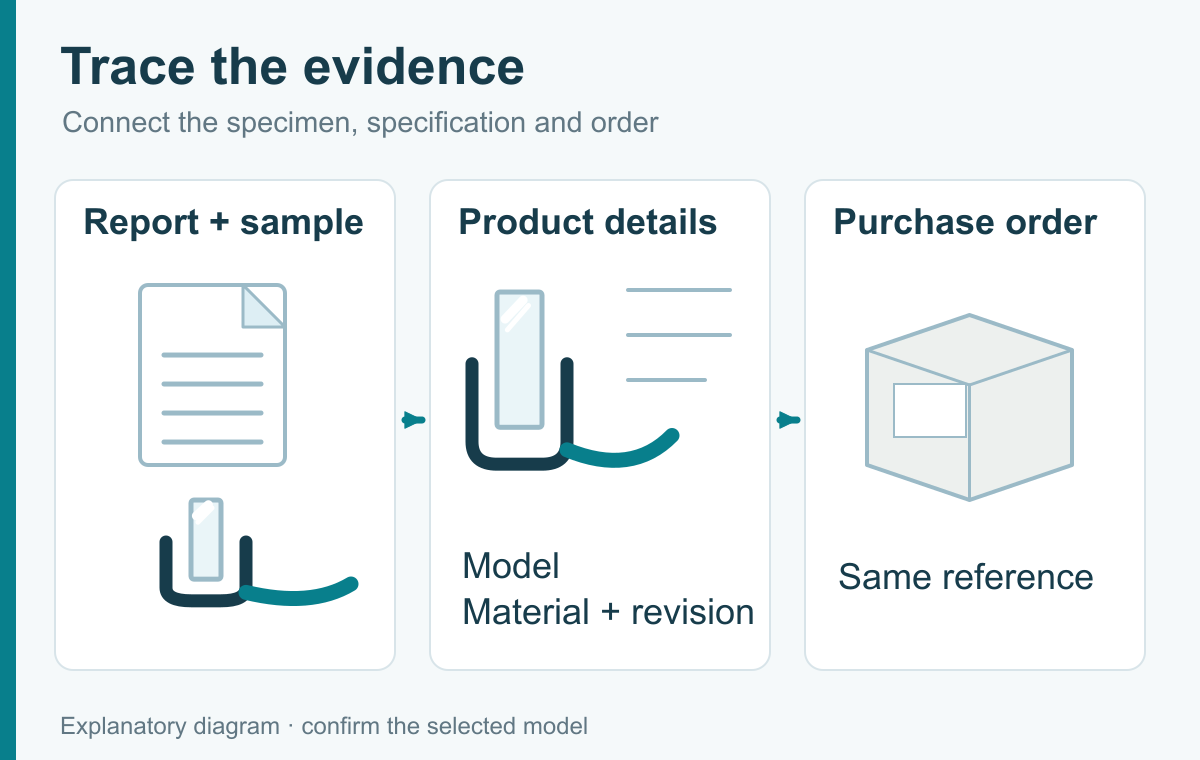
Ask for the complete report, including the sample description, photographs, test conditions and result pages. Connect it to the proposed model, drawing revision, material and colour.
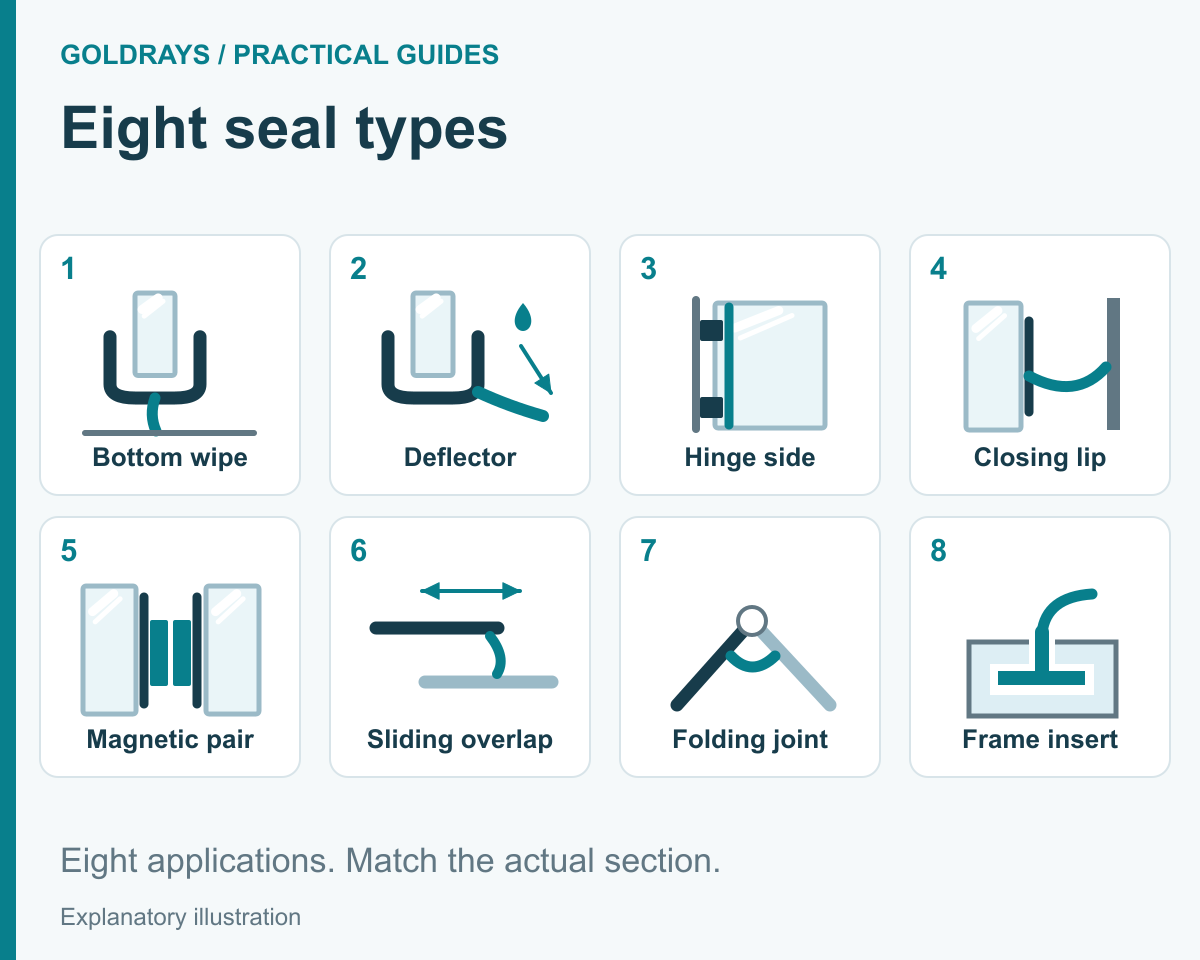
A seal may contain a rigid carrier, flexible lip, magnetic insert and adhesive. Evidence for one component does not automatically cover the others, and a material change may require a fresh review.
Choose evidence that answers your question
For yellowing, look for the exposure conditions and measured appearance change. ASTM G155 describes controlled xenon-arc exposure; test hours alone do not establish years of bathroom use.
For cleaning resistance, check which cleaner, concentration and contact conditions were used. A result for one cleaner cannot establish compatibility with every bathroom product.
For microbial claims, read the organisms, method and rating definition. ISO 846 evaluates microorganism action on plastics; a rating does not mean an installed seal will stay clean without maintenance.
For substance screening, check the material, dated substance list and reporting limits. “Not detected” means below the stated analytical limit, rather than proof of absolute absence.
Public evidence summary
These results concern the submitted samples described below. The public testing summary lists the report numbers; confirm the link to your proposed model, material and colour before relying on them.
| Method and sample | Reported result | Limits |
|---|---|---|
ASTM G155-25, Cycle 6 Sample: Plastic part; three specimens | 300 h: maximum colour change ΔE*ab 0.75; gloss loss 0. No cracking, powdering or yellowing. Passed the client’s stated criteria. | No conversion to years of use; no proof of magnetic closure or leak performance. |
ASTM G21-15(2021)e1 Sample: Sheet sample | 28 days: fungal growth rating 0 (none). | No guarantee that an installed seal stays mould-free. |
ISO 846:2019, Method A Sample: Sample in bag | 28 days: fungal growth intensity 0; mass change 0%. | Applies to the specified fungal test, not every bathroom condition. |
ISO 846:2019, Method C Sample: Sample in bag | 28 days with P. aeruginosa: growth intensity 0; mass change 0%. | Not a disinfection or human-health claim. |
CSA B45.5:22 / IAPMO Z124-2022, §5.15 Sample: Plastic part | Client-supplied Clorox Bleach and Windex Glass Cleaner: 16 h contact, then 24 h conditioning. No visible discolouration, cracking, deformation or fogging. | Only these test conditions; no pass/fail judgment was assigned. Not approval for all cleaners. |
SVHC screening, 2025 scope Sample: Colourless transparent plastic | 250 listed SVHCs and 6 potential SVHCs: ND (below reporting limits). Passed the stated 0.1% w/w evaluation. | Candidate List scope dated 25 Jun 2025. Not current-list certification or proof of absolute absence. |
For both ISO 846 results, intensity 0 means no growth apparent under the microscope. None of these reports, by itself, establishes coverage of every GoldRays model or production batch.
Find the acceptance rule
A prominent “Pass” is only useful when you know the requirement it passed. Find the acceptance criterion and who specified it; a result against a purchase specification is different from certification of an entire range.
If the conclusion is blank or marked with a dash, do not add a pass judgment yourself. Compare suppliers using the same property and sample configuration, and ask for an explanation when methods differ.
Check the working seal too
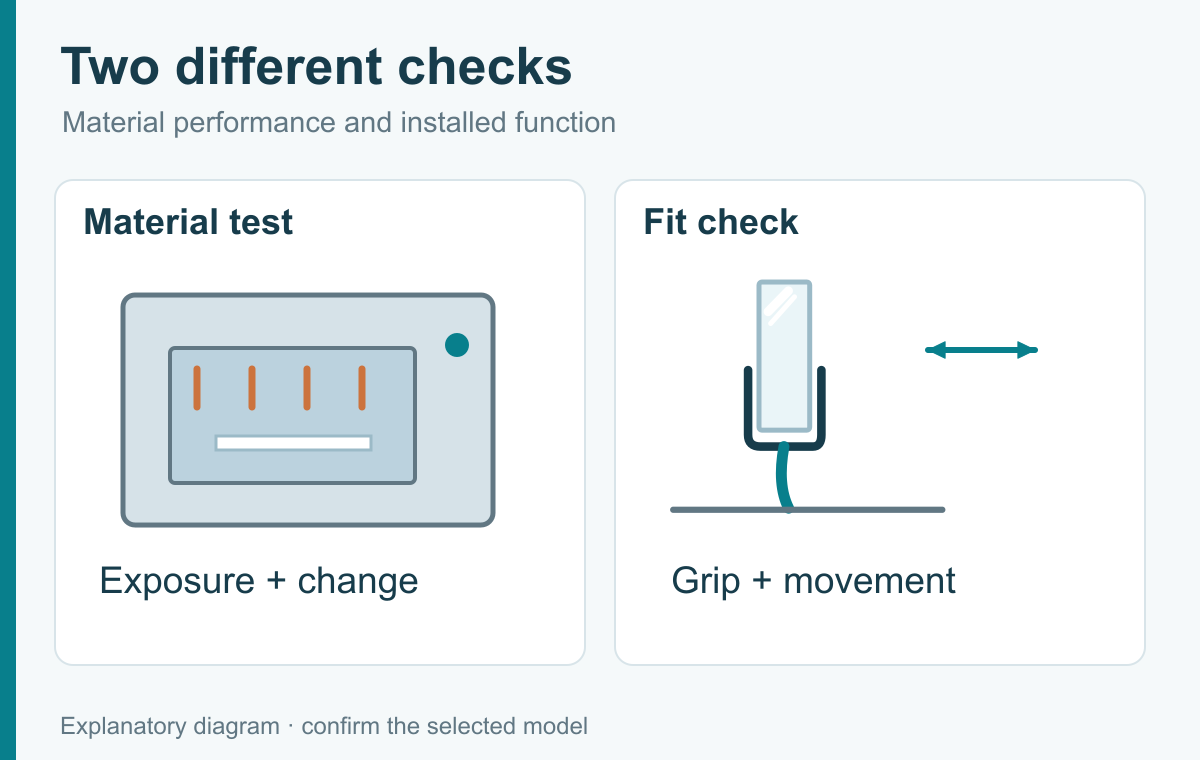
Laboratory evidence and installation approval answer different questions. Check the sample on the intended glass or frame, with the measured gap and normal door movement.
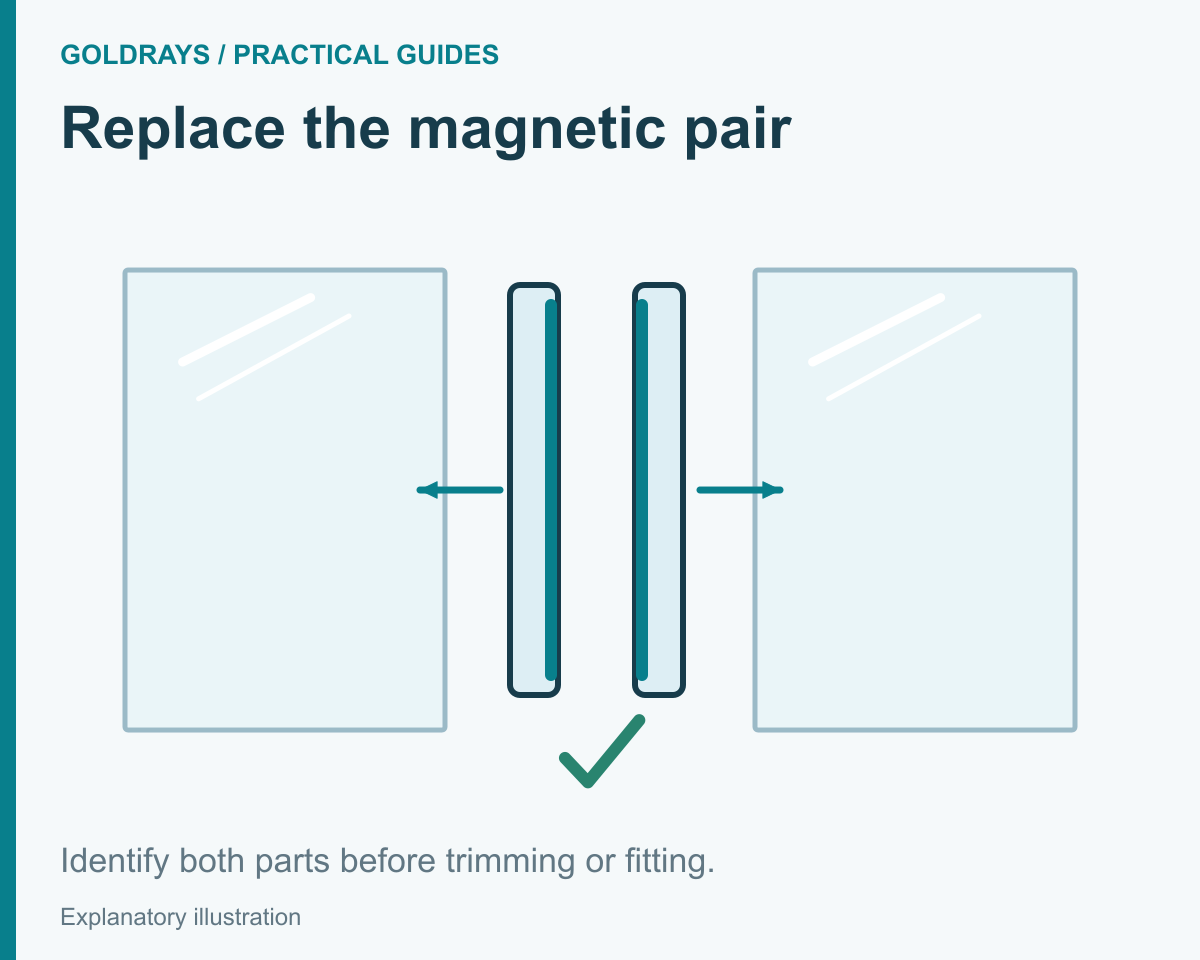
Confirm retention, clearance and water control; assess both mating parts of a magnetic closure. An ageing report cannot prove that an unsuitable profile will fit or prevent a leak.
Keep the report review with the approved drawing and sample reference. For the available public evidence, see GoldRays testing and compliance; use the six quality checks to complete the purchasing record.
About the author
GoldRays technical team
The GoldRays technical team writes these guides at the GoldRays factory in Foshan, China, where clear PVC and polycarbonate shower door seals have been made since 2001. The team works with more than 40 production lines and more than 3,200 moulds for 4 to 15 mm glass, and answers trade questions about fit, materials and testing.
This post is also available in: