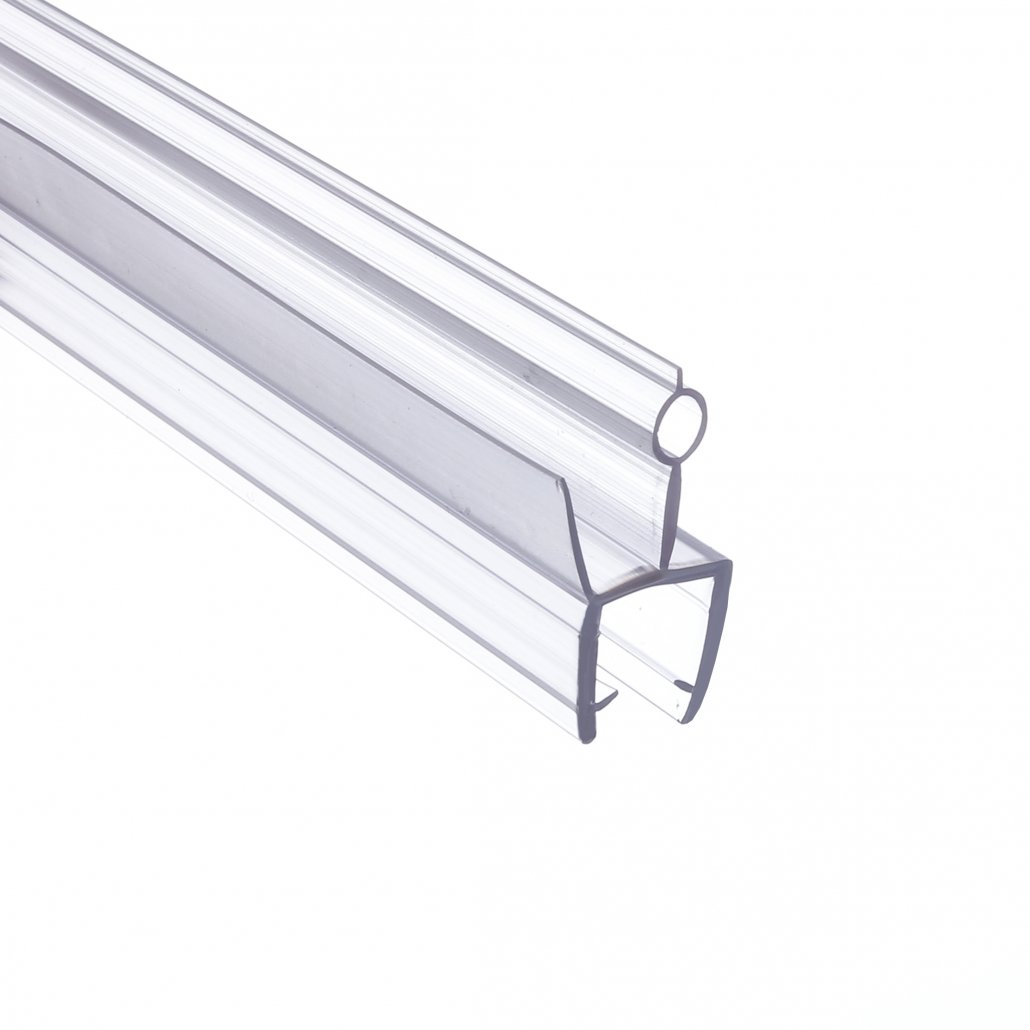
Shower Door Lip Seals: What They Are and How to Choose
Some buyers use shower lip seal to describe a shower seal with a flexible fin, blade or flap. The lip extends toward or lightly contacts the floor, threshold, wall or adjacent glass to help manage splash water across the intended gap.
In shower-door hardware, this describes the shape or function of a shower seal. It is not the same product as an industrial hydraulic, rotary-shaft or oil lip seal. GoldRays manufactures shower seals. The word lip can help describe a design, but the complete seal and shower application determine the right model.
What Does “Lip Seal” Mean on a Shower Door?
Shower-seal terminology is not fully standardised. Buyers and sellers may use lip, fin, flap, wipe or sweep for a flexible section that meets or approaches another surface.
A shower door lip seal may be fitted along the bottom of a door or bath screen, vertically beside a wall or fixed glass panel, or at an overlapping edge on a sliding or bifold door. The name alone does not identify the part: two seals sold under the same description can have different channels, lip lengths, directions, materials and fitting methods.
Common Names Buyers Use
Bottom shower door lip seal
This normally means a seal fitted to the lower glass edge, with a flexible fin or water-deflecting section. Check the glass thickness, gap below the glass, tray or threshold shape, lip direction and door movement.
Side or vertical lip seal
This describes a shower seal on a vertical glass edge that meets a wall, frame or adjacent panel. Check the mounting edge, gap, contact direction and the full opening and closing movement.
Long lip shower seal
A longer flexible fin may help reach a larger or offset gap. Measure the actual gap and contact point, and make sure the fin can move without dragging, folding or blocking the door.
Single-lip or double-lip shower seal
These terms describe a design with one or two flexible fins. A double-lip seal is not automatically better: every fin must match the intended contact point and movement of the enclosure.
Glass lip seal
This is an ambiguous market term. It may mean a shower seal fitted to glass, but it can also refer to an adhesive gasket used in another glass system. State clearly that the enquiry is for a shower door or shower screen, and include the installed position.
How to Choose a Shower Lip Seal
1. Identify the installation position
Show whether the seal sits on the bottom, hinge side, closing side, wall side or between overlapping glass panels. A similar-looking lip can work differently in each position.
2. Measure the glass and the gap
Measure the thickness of the glass that receives the seal and the gap the flexible section must meet. For a push-on design, glass thickness helps select the gripping channel; adhesive and channel-mounted designs require their own mounting dimensions. Glass thickness does not confirm the complete shower seal by itself.
3. Show the lip direction and wet-facing side
Mark which side faces the shower water and where the lip should make contact. A reversed fin can direct water the wrong way or interfere with the door.
4. Record the door movement
Show whether the door swings inward, outward or both ways, slides, folds or remains fixed. Check the shower seal through the full opening and closing path, not only when the door is closed.
5. Confirm the fitting method
Show whether the shower seal pushes onto a glass edge, slides into a channel, uses adhesive or fits another mounting arrangement. Do not assume that similar-looking seals install in the same way.
6. Compare the complete seal
Send a clear side-view photograph, a dimensioned cross-section or a cut sample. Include the required length and estimated quantity. The gripping channel, flexible lip, drip feature and critical dimensions should be compared together.
Which Way Should a Shower Seal Lip Face?
There is no universal direction for every model. On many bottom seals, a water-deflecting fin is positioned so runoff is directed back toward the tray; whether the lip appears to face the wet side depends on the cross-section and mounting orientation. Side, sliding, bifold and two-way swing applications may require a different arrangement.
Use the drawing for the selected model and check the installed position before ordering or cutting. If the direction is unclear, send photographs showing the complete door and both sides of the existing shower seal.
Long Lip, Short Lip, Single Lip or Double Lip?
These words describe geometry, not a universal quality ranking.
- A longer lip may reach a larger gap, but it can drag, fold or obstruct movement if it is not suited to the application.
- A shorter lip may suit a close contact point or a restricted swing path.
- A single lip can work where one defined contact is needed.
- A double-lip design can provide two contact or deflection points, but both fins must correspond to the enclosure.
Choose from the measured application instead of assuming that more or longer material will give better results.
Choose an Existing GoldRays Model or Request a Custom Review
GoldRays maintains more than 3,200 shower-seal moulds across an overall range for 6–15 mm glass. Actual availability and suitability depend on the selected model and complete application.
Review the bottom shower door seals, swinging shower door seals, sliding shower door seals and standard shower-seal range as starting points.
If no existing shower seal matches, GoldRays can review custom shower-seal development from a drawing, sample and application details.
What to Send GoldRays
For an existing-model match or B2B enquiry, send:
- glass thickness;
- installation position;
- measured gap and contact direction;
- door type and movement;
- clear photographs of the complete enclosure and seal cross-section;
- a drawing or physical sample when available;
- required length, estimated quantity and destination market.
Email the information to goldrays@showerdoorseal.org or use the GoldRays contact page. GoldRays can compare it with the existing shower-seal range or review whether a custom route is appropriate.
Frequently Asked Questions
Is a shower lip seal the same as an industrial lip seal?
No. In shower-door searches, lip seal usually describes a shower seal with a flexible fin or flap. Industrial lip seals commonly refer to pressure, shaft, hydraulic or oil-sealing products. GoldRays supplies shower seals, not generic industrial lip seals.
Is a glass lip seal always a shower seal?
No. The phrase can also describe adhesive gaskets or seals used in other glass systems. Add shower door or shower screen to the enquiry and provide the installed position and seal cross-section.
Can I choose a shower lip seal from glass thickness alone?
No. Glass thickness is needed for a push-on seal’s gripping channel, but the gap, lip direction, mounting position, door movement and complete seal design also affect suitability. Other mounting methods require their own dimensions.
Does the lip always face inside the shower?
Not for every design. Many water-deflecting bottom seals use a fin toward the wet side, but the correct direction depends on the model and application. Check the model drawing and installed arrangement.
Is a double-lip seal better than a single-lip seal?
Not automatically. A double-lip design is useful only when both fins correspond to the intended contact points and door movement. Select by geometry and function rather than the number of lips.
Does GoldRays manufacture shower lip seals?
GoldRays manufactures shower seals with flexible lip or fin designs for bottom, vertical, swing, sliding and other shower-door applications. Send the glass thickness, gap, door arrangement and seal cross-section so an existing model or custom requirement can be reviewed.