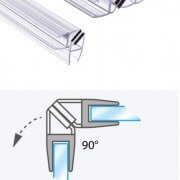

Guides to shower door seal types, profile applications, magnetic seals, bottom seals, bath screen seals and related enclosure configurations.

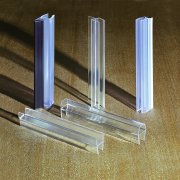
GoldRays is a China-based bath screen seal manufacturer and B2B bath screen seal supplier for shower enclosure brands, importers, distributors and project buyers. We supply clear PVC profiles, polycarbonate profiles, magnetic seals, bottom seals and custom sealing profiles for bath and shower screens. Whether you are developing a new enclosure or sourcing a replacement profile, our team can review your drawing, physical sample or application information and help identify a suitable option.
A bath screen seal must work with the glass, gap, movement and mounting method. Profiles that look similar in photographs may fit differently. GoldRays therefore treats selection as a matching task based on the screen construction, profile cross-section and required dimensions.
For a broader overview of related applications, visit our shower screen seal supplier page.
Bath screens may use seals at the bottom, vertical or closing edge, or between moving panels. A bottom profile may help direct splash water toward the bath, while a magnetic pair may support two compatible closing edges. Side and custom profiles can cover gaps, cushion contact or connect with a frame or channel. For product development and replacements, buyers can send an existing sample or a drawing for review.
| Buyer requirement | Seal option to consider | Common application | Information to provide |
|---|---|---|---|
| A clear profile for a visible glass edge | Clear PVC profile | Side, edge or general screen sealing | Cross-section, glass thickness, gap and length |
| A rigid clear profile for a defined shape | Polycarbonate profile | Structured edge or bottom applications | Drawing or sample, key dimensions and fitting method |
| Two screen edges that close together | Magnetic seal pair | Moving glass-to-glass closure | Closing layout, angle, polarity arrangement and glass details |
| A seal along the lower edge of a screen | Bottom seal | Bath or shower screen bottom edge | Glass thickness, gap below the glass and water-facing direction |
| A shape not covered by an existing profile | Custom sealing profile | New enclosure design or unusual replacement | Dimensioned drawing, sample or clear cross-section reference |
| A curved bath screen | Curved bath screen seal matching | Curved glass or a curved lower edge | Screen geometry, curve information, sample or drawing and installation position |
This table is a starting point. Fit depends on the complete screen design, glass edge and installation. Product details are confirmed after GoldRays reviews the buyer’s information.
A curved bath screen seal must correspond to the curve location, sealing-lip orientation and attachment method, not only the overall length. For curved applications, send a dimensioned drawing where possible. Otherwise, provide a sample and clear photographs of the cross-section, installed position and complete screen. Include available curve or radius information and identify the wet-facing side. GoldRays can compare these details with available profiles or consider a custom profile.
Replacement projects often begin without an original model number. GoldRays supports matching from drawings and samples. For an efficient review, provide:
These details distinguish profiles with different channels, lips or mounting arrangements. Confirm final compatibility against the intended screen before approving the specification.
GoldRays supports OEM/ODM work that starts with an existing profile, drawing or application requirement. Product families include clear PVC, polycarbonate, magnetic and bottom seals, together with custom sealing profiles.
Describe the screen construction, application and fitting method. For a magnetic closure, include the position of both edges. For a curved screen, include its geometry and installed orientation. GoldRays will review an existing or custom-profile route; availability and specifications are confirmed per project.
Buyers comparing related categories can also review our bottom shower door seals, magnetic shower door seals, standard seal profiles and polycarbonate shower seal solutions.
Send drawings, sample photographs or application details to goldrays@showerdoorseal.org. State whether the enquiry concerns a new screen, replacement programme or OEM/ODM project, and include any material preference. GoldRays can then review the requirement and respond with technical questions or a product direction.
GoldRays is a China-based manufacturer and B2B supplier of shower and bath screen sealing profiles. The range includes clear PVC, polycarbonate, magnetic, bottom and custom profiles.
It is a profile fitted to an edge or connection point of a bath or shower screen. Depending on its design and position, it may help manage splash water, cover a gap, cushion contact or support a compatible closing arrangement.
Yes. Send a physical sample, a dimensioned drawing or clear photographs of the cross-section and installed screen. Glass thickness, gap, fitting position and length are also useful for matching.
GoldRays can review curved-screen requirements from a drawing, sample and screen geometry. The correct route depends on the profile shape, curve, attachment method and application. A suitable existing or custom option can be discussed after review.
Confirmed product families include clear PVC and polycarbonate profiles. GoldRays also supplies magnetic and bottom seal configurations. The appropriate material and construction depend on the required profile and screen design.
Yes. GoldRays supports OEM/ODM profile matching and development from buyer-supplied drawings, samples and application requirements. Final specifications and availability are confirmed for each project.
Email goldrays@showerdoorseal.org with your company details, drawing or sample photographs, glass and gap information, required length and application. You can also use the GoldRays contact page.
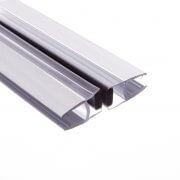
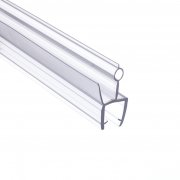
Some buyers use shower lip seal to describe a shower seal with a flexible fin, blade or flap. The lip extends toward or lightly contacts the floor, threshold, wall or adjacent glass to help manage splash water across the intended gap.
In shower-door hardware, this describes the shape or function of a shower seal. It is not the same product as an industrial hydraulic, rotary-shaft or oil lip seal. GoldRays manufactures shower seals. The word lip can help describe a design, but the complete seal and shower application determine the right model.
Shower-seal terminology is not fully standardised. Buyers and sellers may use lip, fin, flap, wipe or sweep for a flexible section that meets or approaches another surface.
A shower door lip seal may be fitted along the bottom of a door or bath screen, vertically beside a wall or fixed glass panel, or at an overlapping edge on a sliding or bifold door. The name alone does not identify the part: two seals sold under the same description can have different channels, lip lengths, directions, materials and fitting methods.
This normally means a seal fitted to the lower glass edge, with a flexible fin or water-deflecting section. Check the glass thickness, gap below the glass, tray or threshold shape, lip direction and door movement.
This describes a shower seal on a vertical glass edge that meets a wall, frame or adjacent panel. Check the mounting edge, gap, contact direction and the full opening and closing movement.
A longer flexible fin may help reach a larger or offset gap. Measure the actual gap and contact point, and make sure the fin can move without dragging, folding or blocking the door.
These terms describe a design with one or two flexible fins. A double-lip seal is not automatically better: every fin must match the intended contact point and movement of the enclosure.
This is an ambiguous market term. It may mean a shower seal fitted to glass, but it can also refer to an adhesive gasket used in another glass system. State clearly that the enquiry is for a shower door or shower screen, and include the installed position.
Show whether the seal sits on the bottom, hinge side, closing side, wall side or between overlapping glass panels. A similar-looking lip can work differently in each position.
Measure the thickness of the glass that receives the seal and the gap the flexible section must meet. For a push-on design, glass thickness helps select the gripping channel; adhesive and channel-mounted designs require their own mounting dimensions. Glass thickness does not confirm the complete shower seal by itself.
Mark which side faces the shower water and where the lip should make contact. A reversed fin can direct water the wrong way or interfere with the door.
Show whether the door swings inward, outward or both ways, slides, folds or remains fixed. Check the shower seal through the full opening and closing path, not only when the door is closed.
Show whether the shower seal pushes onto a glass edge, slides into a channel, uses adhesive or fits another mounting arrangement. Do not assume that similar-looking seals install in the same way.
Send a clear side-view photograph, a dimensioned cross-section or a cut sample. Include the required length and estimated quantity. The gripping channel, flexible lip, drip feature and critical dimensions should be compared together.
There is no universal direction for every model. On many bottom seals, a water-deflecting fin is positioned so runoff is directed back toward the tray; whether the lip appears to face the wet side depends on the cross-section and mounting orientation. Side, sliding, bifold and two-way swing applications may require a different arrangement.
Use the drawing for the selected model and check the installed position before ordering or cutting. If the direction is unclear, send photographs showing the complete door and both sides of the existing shower seal.
These words describe geometry, not a universal quality ranking.
Choose from the measured application instead of assuming that more or longer material will give better results.
GoldRays maintains more than 3,200 shower-seal moulds across an overall range for 6–15 mm glass. Actual availability and suitability depend on the selected model and complete application.
Review the bottom shower door seals, swinging shower door seals, sliding shower door seals and standard shower-seal range as starting points.
If no existing shower seal matches, GoldRays can review custom shower-seal development from a drawing, sample and application details.
For an existing-model match or B2B enquiry, send:
Email the information to goldrays@showerdoorseal.org or use the GoldRays contact page. GoldRays can compare it with the existing shower-seal range or review whether a custom route is appropriate.
No. In shower-door searches, lip seal usually describes a shower seal with a flexible fin or flap. Industrial lip seals commonly refer to pressure, shaft, hydraulic or oil-sealing products. GoldRays supplies shower seals, not generic industrial lip seals.
No. The phrase can also describe adhesive gaskets or seals used in other glass systems. Add shower door or shower screen to the enquiry and provide the installed position and seal cross-section.
No. Glass thickness is needed for a push-on seal’s gripping channel, but the gap, lip direction, mounting position, door movement and complete seal design also affect suitability. Other mounting methods require their own dimensions.
Not for every design. Many water-deflecting bottom seals use a fin toward the wet side, but the correct direction depends on the model and application. Check the model drawing and installed arrangement.
Not automatically. A double-lip design is useful only when both fins correspond to the intended contact points and door movement. Select by geometry and function rather than the number of lips.
GoldRays manufactures shower seals with flexible lip or fin designs for bottom, vertical, swing, sliding and other shower-door applications. Send the glass thickness, gap, door arrangement and seal cross-section so an existing model or custom requirement can be reviewed.

Shower door seal manufacturer and B2B supplier in China

GoldRays is a China-based manufacturer and B2B supplier of shower door seals, including custom shower-seal development. We supply shower seals and related gaskets to shower-door and glass-hardware businesses worldwide.
ADDRESS
2409, Building 2, Zhongqu, Chengshi Garden, Linnandadaobei, Foshan 528000, ChinaCONTACT PERSON: Raymond
EMAIL: goldrays@showerdoorseal.org
PHONE NO. +86 757 8383 9170