Last updated: October 2026
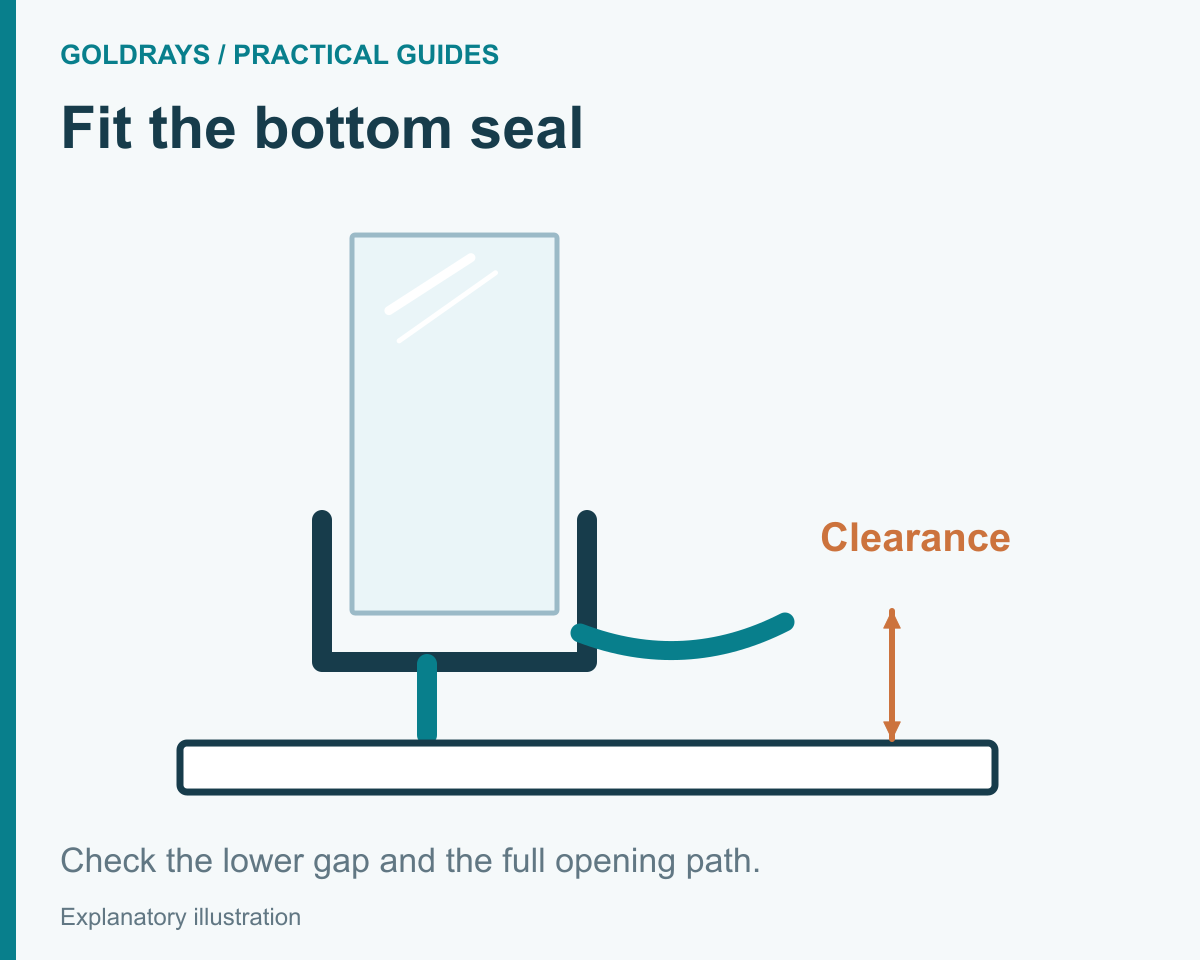
A shower door bottom seal clips onto the lower edge of the glass and stops water escaping under the door. Most combine a soft sweep (a fin that brushes the tray or floor) with a drip rail (a deflector that sends water running down the glass back into the shower). Choose one by glass thickness, the gap under the door, and whether the door swings or slides.

Types of bottom seal
| Type |
What it does |
Best for |
| Sweep with drip rail |
Fin closes the gap; deflector turns water back inside |
Hinged and pivot doors over a tray or level floor |
| Bubble (bulb) seal |
A hollow bulb compresses against the floor |
Uneven floors and wider gaps |
| Double fin |
Two fins for an extra barrier |
Doors facing the shower head directly |
| Low-friction sweep |
Short, smooth fin |
Sliding doors and doors that drag |
| Drip rail only |
Deflector without a fin |
Doors over a raised threshold or upstand |
GoldRays’ bottom seal range covers the common glass thicknesses from 6 to 12 mm, plus profiles for thinner bath-screen glass.
How to measure

- Glass thickness at the bottom edge: commonly 6, 8 or 10 mm.
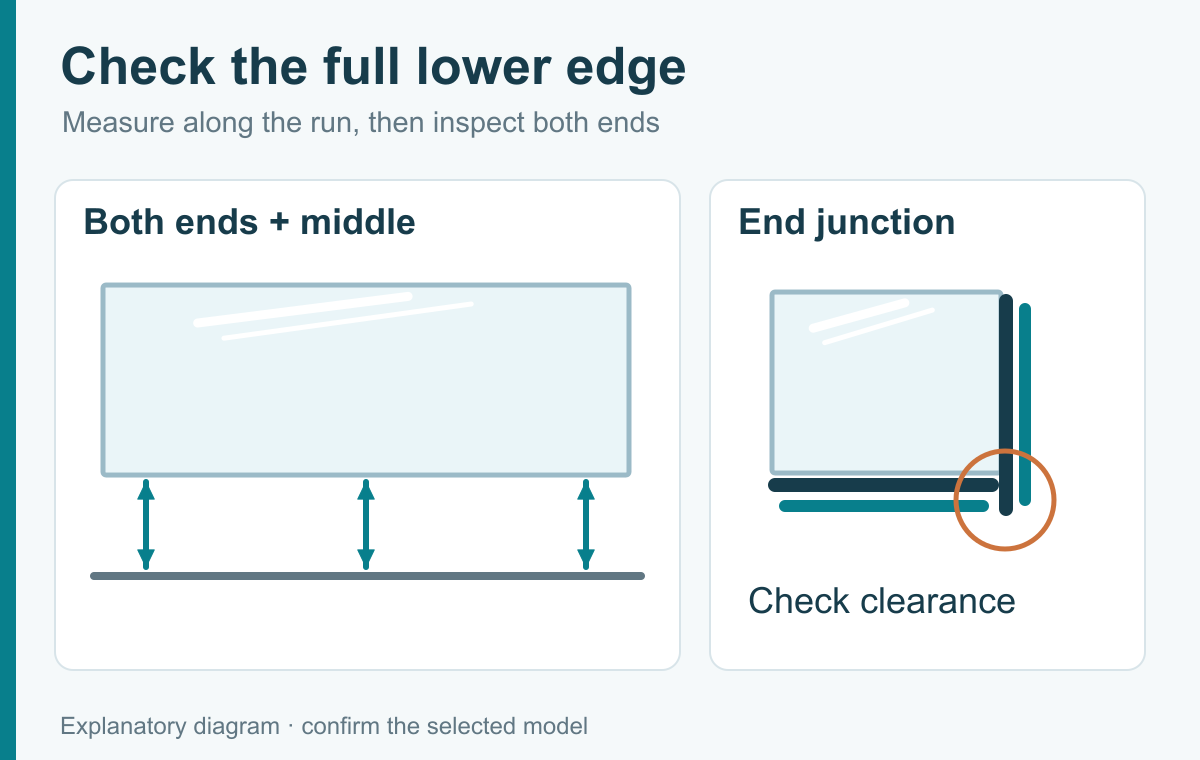
- Gap between the bottom of the glass and the tray or floor, at both ends and in the middle. Use the largest reading.
- Door movement: swing direction (inward or outward) and whether it passes over a threshold.
- Length: the full width of the glass edge.
See the full measuring guide and the size chart.
How to fit it so it doesn’t leak
- Remove the old seal and clean the glass edge (a little diluted alcohol removes soap film).
- Push the new seal on loosely, with the drip rail facing into the shower.
- Close the door and check the fin touches the floor along its length without forcing the door open.
- Mark and trim flush with the hinge-side edge. Stopping short of the edge is the commonest cause of corner leaks.
- Push the seal fully home and run water at the bottom corners to check.
Clean, adjust or replace?
| You see |
Likely cause |
Action |
| Dirty or stained, but soft and intact |
Soap scum, limescale |
Clean with mild soap; diluted vinegar for limescale |
| Door drags on the seal |
Door has dropped, or the fin is too long |
Tighten or adjust the hinges; trim or choose a shorter fin |
| Water at one corner |
Seal stops short, or doesn’t meet the side seal |
Refit or replace so it runs edge to edge |
| Split, hard or yellow fin |
Worn material |
Replace |
| Water along the whole length |
Wrong gap size, or drip rail facing out |
Fit the correct size with the deflector facing in |
Trade buyers: request free samples of any bottom seal model. Minimum order is 500 m per model as a guide; smaller runs are possible.
Frequently asked questions
Which way does the drip rail face?
Into the shower. The angled deflector catches water running down the glass and turns it back inside.
Why does my new bottom seal still leak?
Usually the seal is for the right glass thickness but the wrong gap, it was trimmed short of the hinge edge, or the deflector faces outward.
Do frameless shower doors need a bottom seal?
Almost always, unless the door closes over a raised upstand that contains the water. Without one, water runs under the door.
About the author
GoldRays technical team
The GoldRays technical team writes these guides at the GoldRays factory in Foshan, China, where clear PVC and polycarbonate shower door seals have been made since 2001. The team works with more than 40 production lines and more than 3,200 moulds for 4 to 15 mm glass, and answers trade questions about fit, materials and testing.
Ask the technical team