How to Remove Mould from Shower Door Seals
Last updated: October 2026
To remove mould from a shower door seal, take the seal off if it clips on, soak it in warm water with mild detergent, scrub gently with a soft toothbrush, and treat stubborn spots with diluted white vinegar or a mould spray labelled safe for plastics. Rinse and dry fully. If black spots remain inside the plastic or in the fold of the fin, the mould has penetrated and the seal should be replaced.
Step by step
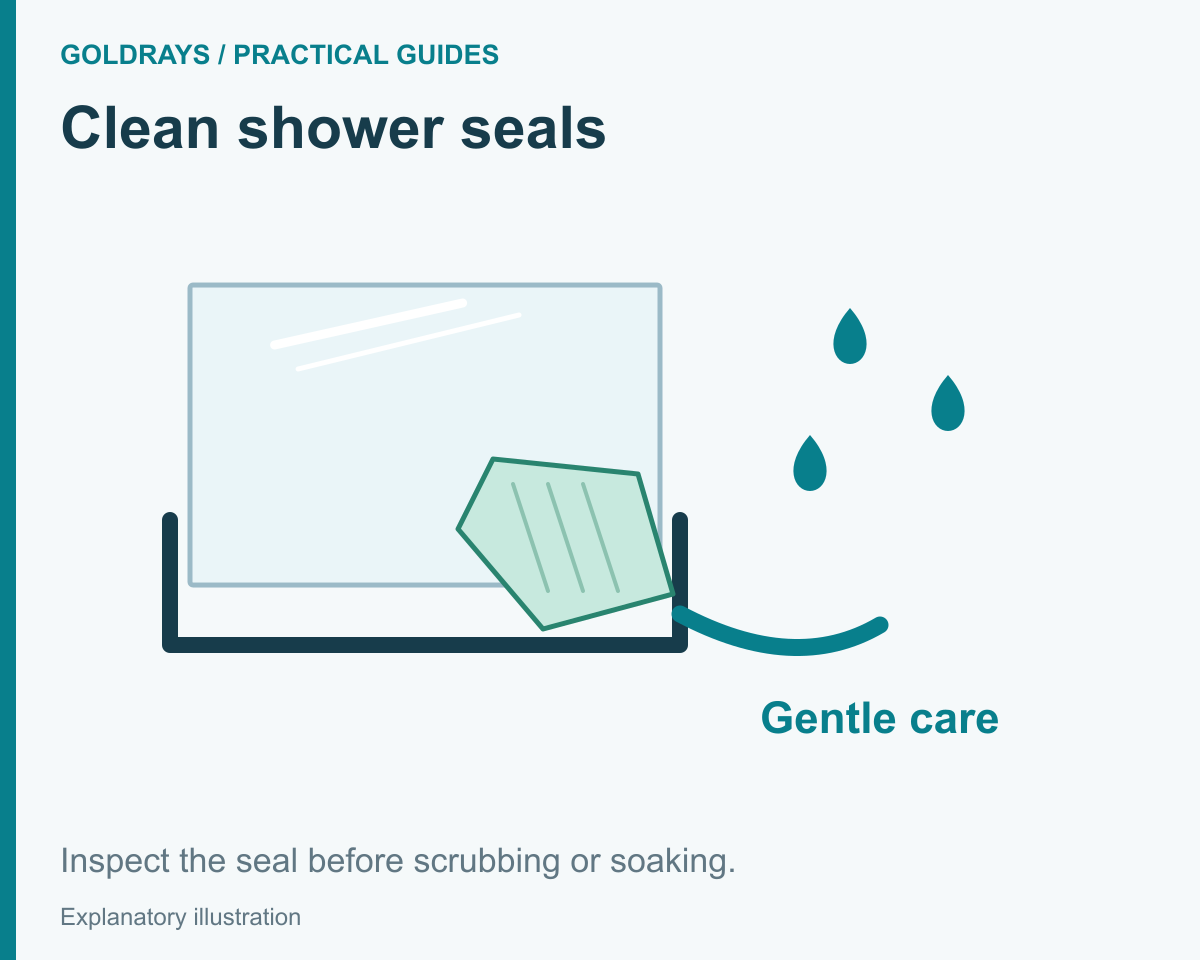
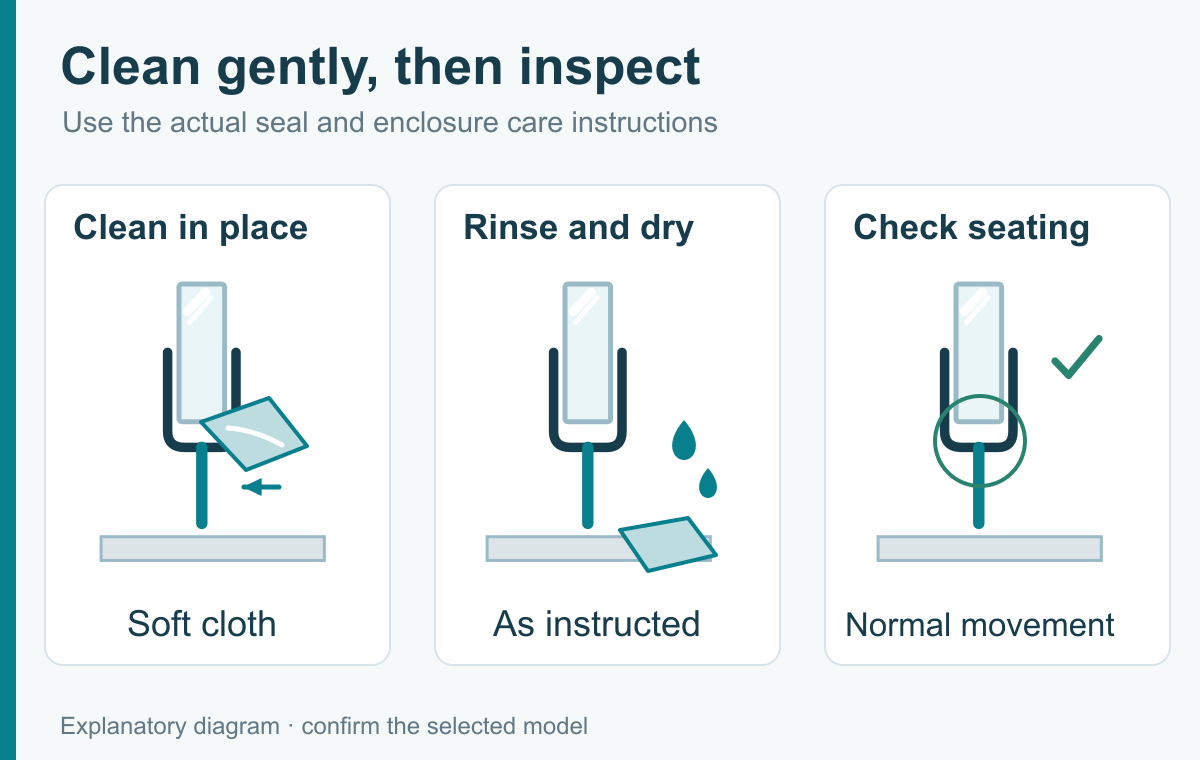
- Remove the seal if you can. Clip-on seals pull off the glass edge; this lets you clean the channel and fold where mould hides.
- Soak for 10 to 15 minutes in warm water with a little washing-up liquid.
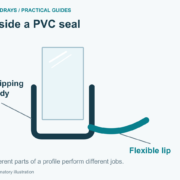
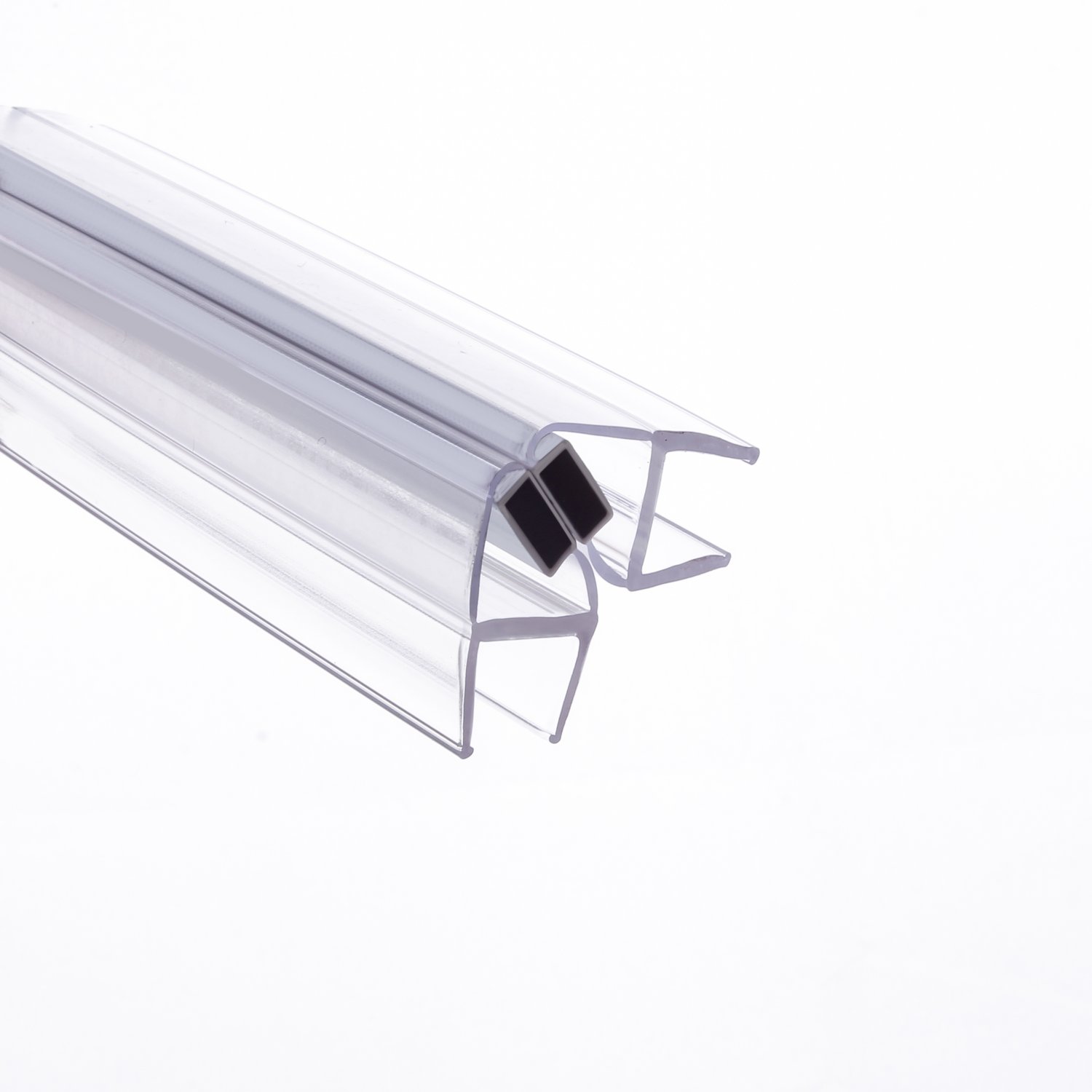
- Scrub with a soft toothbrush, working into the fin fold and the channel.
- Treat stubborn spots with diluted white vinegar (about 1 part vinegar to 1 part water) for a few minutes, or a mould remover that says it is safe for plastics. Test on a small area first.
- Rinse thoroughly, dry completely, and refit.
- Clean the glass edge where the seal sits before refitting.
What to avoid
- Undiluted bleach or chlorine cleaners: they can cloud and yellow clear seals and harden PVC.
- Abrasive pads, scouring creams and wire brushes: they scratch the surface, giving mould more places to grow.
- Solvents such as acetone or paint thinner: they attack the plastic.
When cleaning won’t work
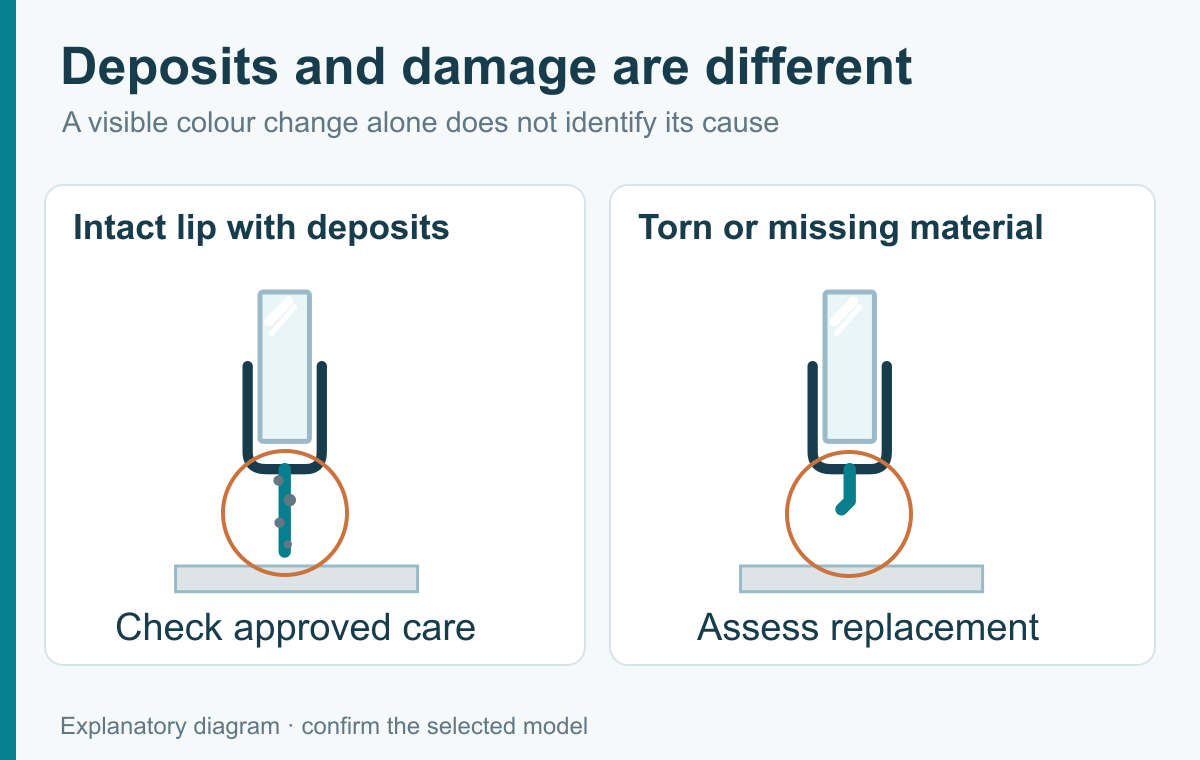
Mould that has grown into the plastic shows as grey or black spots that don’t move however much you scrub. At that point the seal can’t be restored. Replacement seals are inexpensive; choose one with a mould-resistance test result (ASTM G21 or ISO 846). See how to replace a shower door seal.
Stopping mould coming back
- Squeegee or wipe the glass and seal after showering.
- Leave the door open and run the extractor fan for 15 to 20 minutes.
- Clean seals weekly with mild soap before mould gets a hold.
- Choose seals with antimicrobial protection. GoldRays SuperClear™ samples rated Grade 0 (no growth) in ASTM G21 and ISO 846 tests by SGS (see the results).
Frequently asked questions
Can I use bleach on shower door seals?
Avoid undiluted bleach. If you use a bleach-based spray, use it sparingly, rinse quickly, and expect it to shorten the life of clear seals.
Why does mould grow on my shower seal?
Soap residue, skin oils and moisture feed it, and the folds of the seal stay damp. Seals without antimicrobial additives give it an easy start.
Is black mould on a shower seal dangerous?
Mould can affect people with allergies or breathing conditions, so remove it promptly and keep the bathroom ventilated. If it’s inside the plastic, replace the seal.
About the author
GoldRays technical team
The GoldRays technical team writes these guides at the GoldRays factory in Foshan, China, where clear PVC and polycarbonate shower door seals have been made since 2001. The team works with more than 40 production lines and more than 3,200 moulds for 4 to 15 mm glass, and answers trade questions about fit, materials and testing.